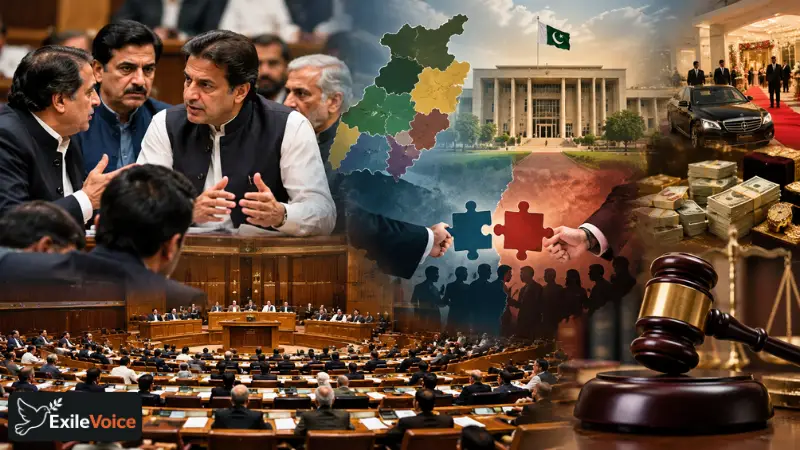
The landscape of political communication in Pakistan is increasingly characterized by a clash between digital-age perception and traditional institutional control. The recent viral nature of Imran Khan’s hospital transfer serves as a primary case study for how information, imagery, and political narratives are managed, contested, and consumed in a hyper-connected environment.
The media coverage surrounding Khan highlights a significant shift in power dynamics. Conventional media, often restrained or selective, found itself compelled to report on events that were simultaneously being documented and amplified by amateur social media users. This convergence of professional journalism and viral grassroots documentation has made it nearly impossible for institutional narratives to maintain a monopoly on the public's attention.
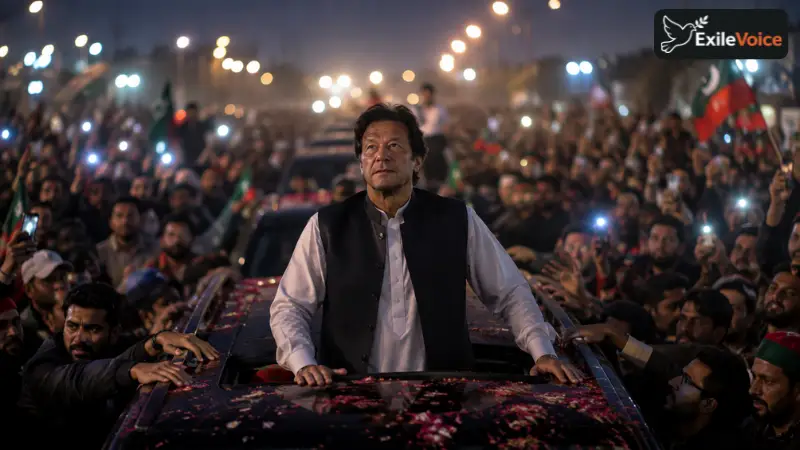
A critical aspect of this dynamic is the tension between official statements and the reality on the ground. When institutions or political rivals attempt to frame Khan’s political activities as "malicious" or coordinated "propaganda," these claims are frequently undercut by the visual evidence of widespread, uncoordinated public support. The video suggests that professional political actors who rely on traditional methods of narrative control find themselves at a disadvantage because they cannot replicate the organic viral resonance that Khan achieves, even in his absence from the public stage.
Furthermore, the discussion highlights the risks associated with the proliferation of artificial intelligence in political communication. As viral images, both authentic and AI-generated, circulate, journalists and media houses are challenged to maintain verification standards. Mistakes in reporting, such as the initial circulation of non-authentic imagery, risk undermining the credibility of the entire media ecosystem. However, the core lesson remains: the speed and reach of information in the current climate mean that institutional responses to online criticism are often perceived as reactive and ineffective. As political entities continue to struggle with their online presence, the ability to control, or even counter, the prevailing public sentiment remains one of the most significant challenges in the Pakistani political arena.