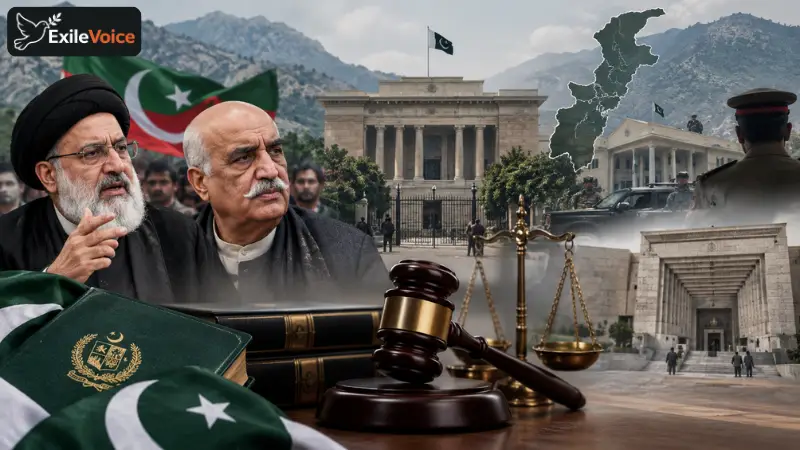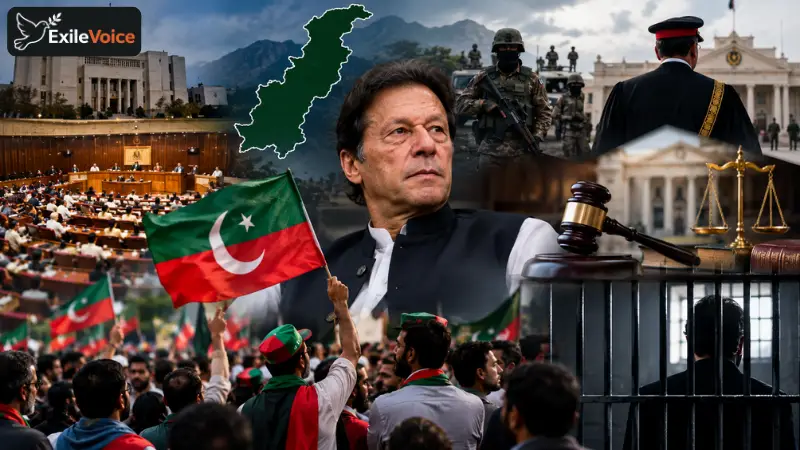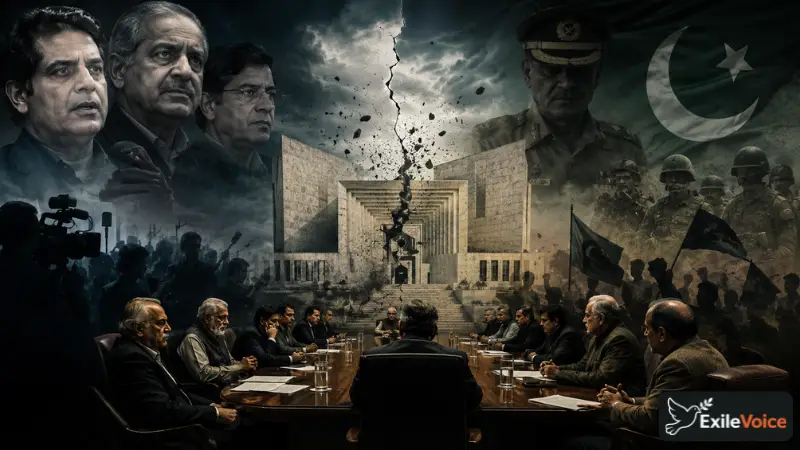
The political and constitutional matrix of Pakistan is currently undergoing a profound crisis of legitimacy, characterized by acute friction between de facto military authority and de jure civilian governance. The ongoing structural shifts within the legislative and executive branches reflect a broader, systemic struggle for institutional dominance. This dynamic has left the country’s democratic framework increasingly fragile, as evidenced by unprecedented friction within the highest offices of regional and federal administration.
A pivotal indicator of this institutional fracturing is the extraordinary public statement by the Acting President of Azad Kashmir, Chaudhry Latif Akbar. In a move that mirrors the historic grievances of former Pakistani President Dr. Arif Alvi, Akbar publicly distanced himself from official executive directives issued under his own name and seal. Specifically, the Acting President denied authorizing the contentious notifications that designated civilian protest organizers as outlaws and placed multi-million rupee bounties on political dissidents. This revelation exposes a critical systemic vulnerability: the routine bypass of constitutional figureheads by deep-state actors to manufacture legal mandates for political crackdowns. When the titular head of a state entity openly admits that executive orders are being forged or issued under duress, the foundational rule of law collapses, giving way to unvarnished administrative authoritarianism.
Simultaneously, the federal legislative arena is bracing for intense political maneuvering regarding the 18th Constitutional Amendment. Long considered a cornerstone of provincial autonomy and democratic decentralization, the amendment has faced sustained pressure from centralized state institutions seeking greater control over fiscal resources. Senior political figures, including the Pakistan Muslim League-Nawaz (PML-N) leadership represented by Rana Sanaullah, have indicated that a consensus has been reached behind closed doors. Rather than pursuing a direct, highly visible parliamentary repeal, which would trigger intense resistance from provincial stakeholders, the federal center is shifting toward a technical workaround. By establishing specialized financial committees to alter resource allocation mechanisms without formally touching the constitutional text, the state apparatus aims to achieve fiscal centralization through bureaucratic reconfiguration.
This erosion of democratic norms is equally visible in the state’s aggressive deployment of regulatory and punitive measures against independent journalism. The recent invocation of the Prevention of Electronic Crimes Act (PECA) against prominent media figures, such as Irshad Bhatti and Anwar操作 Hussain Sumra, highlights a systematic campaign to suppress investigative reporting on administrative corruption. Journalists breaking stories on lavish public expenditures by senior bureaucrats, such as multi-million rupee renovations for personal estates amidst national economic austerity, face immediate legal intimidation and state-enforced censorship. The subsequent retraction of stories by mainstream broadcast networks underscores the extreme pressure exerted on media houses to conform to state narratives.
Furthermore, internal leadership rifts within the primary opposition party, Pakistan Tehreek-e-Insaf (PTI), continue to complicate the anti-establishment resistance. Discrepancies between the official party leadership under Chairman Barrister Gohar Khan and senior ideological stalwarts like former National Assembly Speaker Asad Asad Kaser regarding electoral outcomes in Gilgit-Baltistan reveal deep strategic fragmentation. Concurrently, regional legislative blocks are fracturing, with factions pledging allegiance to embattled figures like Ali Amin Gandapur while openly rejecting center-appointed leadership. As long as political parties remain divided by internal rivalries and state-induced pressure, the prospects for a unified, legally grounded return to constitutional supremacy remain severely constrained.