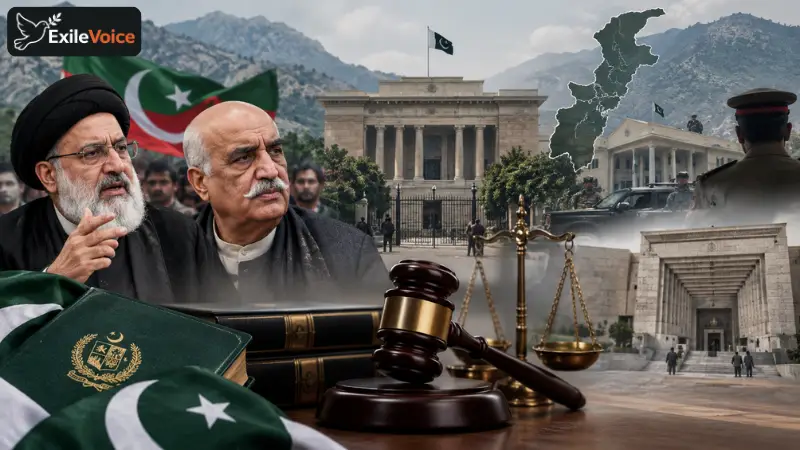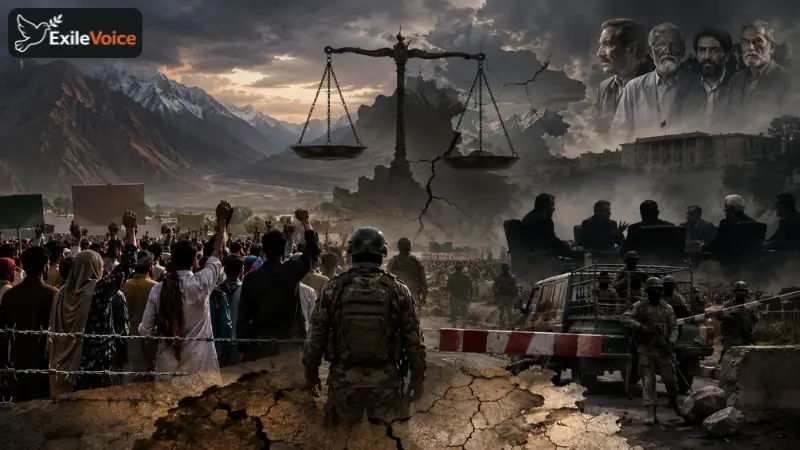
The internal security matrix of Pakistan is experiencing heightened stress across its peripheral territories, driven by a combination of unfulfilled administrative pledges, structural constitutional ambiguities, and heavy-handed institutional responses. In regions such as Gilgit-Baltistan and Azad Kashmir, the historical delay in establishing absolute constitutional parity with core provinces has fostered deep-seated alienation, particularly among the expanding youth demographic. Experienced administrative observers and historical analysts have repeatedly cautioned that these sensitive border territories possess distinct socio-political dynamics that resist standardized federal enforcement models. Unlike the central plains, where institutional pressure frequently dampens political mobilization, the peripheral regions display a low threshold for systemic friction and a high propensity for sustained civil resistance.
The immediate catalyst for renewed instability in these regions is the breakdown of agreements between local representation bodies and federal authorities. In Azad Kashmir, the Joint Awami Action Committee has re-initiated large-scale mobilization protocols following what local leadership characterizes as a systematic breach of trust regarding subsidized economic provisions, localized educational funding, and regional development allocations. The introduction of securitization models previously utilized to suppress dissent in urban centers has backfired when deployed in these sensitive zones. Local leadership has actively counseled populations to prepare for prolonged socioeconomic standoffs, including advising the accumulation of long-term food reserves, signaling an anticipation of severe administrative lockouts or direct supply disruptions.
Simultaneously, the political landscape in Balochistan has fractured further due to the systematic criminalization of mainstream constitutional advocacy. The registration of treason and sedition charges against veteran parliamentarians and recognized regional leaders underscores a broader institutional strategy aimed at silencing civilian intermediaries. These legal actions are frequently initiated through localized administrative complaints, effectively bypassing high-level judicial scrutiny to create immediate political barriers. This strategy has created a dangerous administrative vacuum. By branding veteran leaders who operate within the legislative framework and uphold the constitutional narrative as state adversaries, the state inadvertently validates the assertions of armed separatist groups.
These insurgent factions, who explicitly reject the constitutional framework, point to the neutralization of peaceful political figures as absolute proof that legal, parliamentary avenues for redressing regional grievances are non-functional. Consequently, security networks observe a dangerous trend where state policing units are forced into passive compliance at localized checkpoints managed by non-state actors, while the civilian administrative apparatus remains preoccupied with litigating mainstream political opposition.
Compounding these regional security fractures is a profound internal polarization within the primary national opposition structures. In the northern provinces, the regional governance machinery has been diverted into internal recriminations, hindering cohesive policy formulation on federal budgetary challenges. Rather than leveraging legislative mechanisms to address governance issues or demand basic humanitarian standards for detained political figures, regional actors are locked in factional disputes. This administrative paralysis directly serves the objectives of central institutional planners, who utilize internal party rifts to dilute regional resistance and enforce centralized financial policies without meaningful structural opposition.