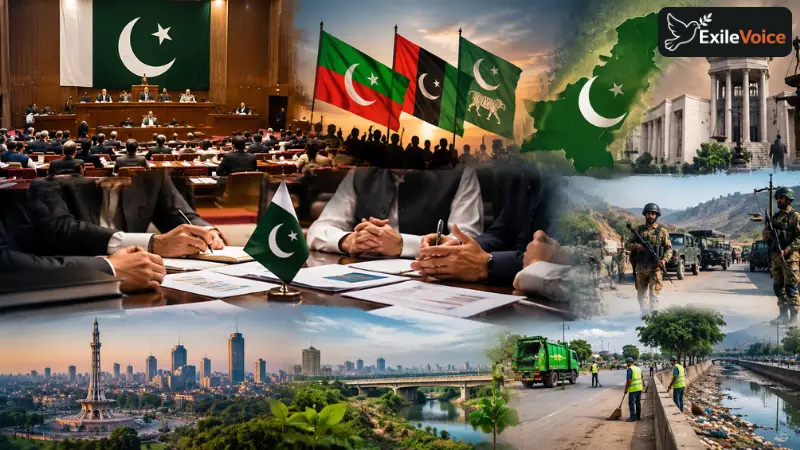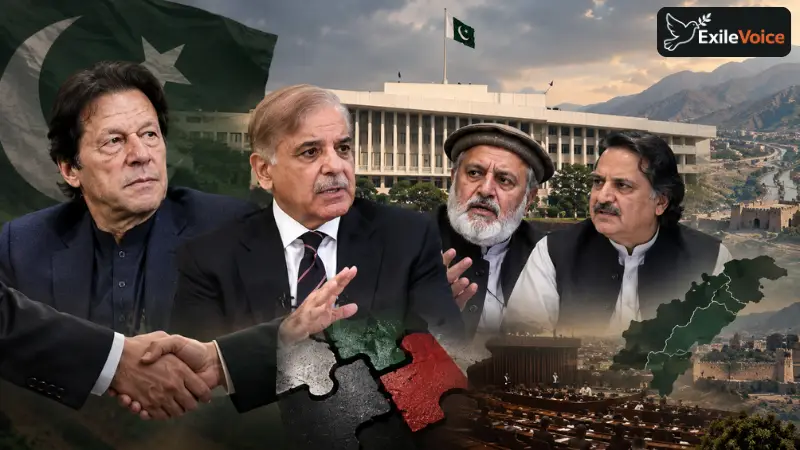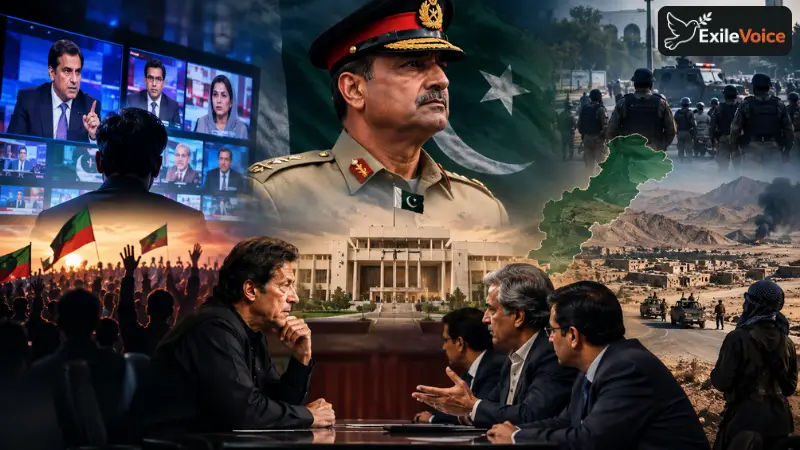
The interaction between Pakistan's military establishment and civilian political institutions continues to dictate the country's governance trajectory. Recent political maneuvers surrounding protest calls, legislative battles, and regional security policies reflect a continuation of systemic pressure strategies designed to manage political dissent and shape institutional outcomes.
A primary mechanism observed in contemporary political governance is the use of media ecosystems to project institutional power and engineer political consensus. High-profile media commentators and security analysts often serve as channels for institutional messaging. By shifting public narratives from messages of reconciliation to threats of executive intervention, establishment strategists create psychological pressure on political opposition groups. The public shifting of analyst opinions within 24-hour cycles demonstrates how structured messaging is deployed to influence opposition decision-making and break political momentum.
Central to this strategy is the security narrative constructed around regional stability and counter-terrorism. Federal authorities and establishment figures frequently frame political protests and provincial resistance as security threats that undermine national defense. By associating opposition activities, such as planned long marches, with external threats or terrorism facilitation, central authorities attempt to legitimize extraordinary executive measures, including potential bans on political parties or the suspension of provincial assemblies.
This institutional posture is reinforced by public messaging from military official channels. Official statements emphasizing that no individual is greater than the state serve a dual narrative purpose. While intended by military leadership to assert institutional supremacy over popular political figures like Imran Khan, political critics invert these statements to challenge the military leadership itself, arguing that institutional heads should not override democratic norms or constitutional structures.
The strategic application of administrative pressure extends into structural law enforcement control. The centralization of police appointments through federal mechanisms allows central authorities to neutralize provincial government power. When provincial administrations attempt to pass local legislation to regain authority over police appointments, federal resistance intensifies, leaving provincial governments administratively constrained despite holding democratic mandates.
The consequences of this continuous governance friction are evident in surrounding administrative zones. In regions like Balochistan, prolonged political instability and ongoing security crises demonstrate the limits of top-down administrative control. Despite active security operations and persistent insurgent activity targeting civilian and economic infrastructure, political mechanisms to address underlying grievances remain underdeveloped, as central focus remains fixated on controlling core political centers.
In conclusion, the reliance on structural pressure, narrative engineering, and administrative centralization reflects a persistent civil-military imbalance in Pakistan. As establishment strategies focus on managing political outcomes and suppressing opposition movements, the broader institutional framework faces heightened fragility, hindering long-term democratic consolidation and regional stability.