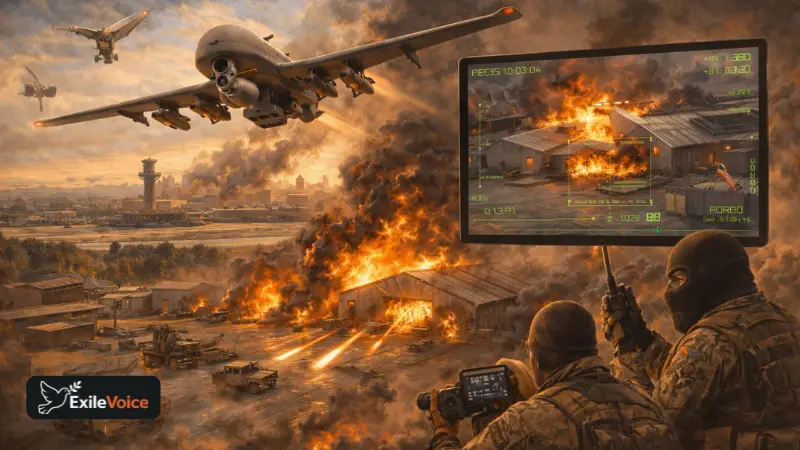
The ongoing conflict in West Asia has entered a sophisticated new phase characterized by surgical precision and a dominant intelligence apparatus. Recent footage released from an Iraqi based, Iranian backed group highlights a significant shift in drone warfare. Unlike earlier iterations of loitering munitions that were used for broad saturation attacks, the latest deployments demonstrate a high degree of selective targeting. Video evidence from Victoria Camp, an American base located near Baghdad International Airport, shows drones flying at exceptionally low altitudes, bypassing traditional detection systems to hit specific hangars and buildings with high value assets.
The technical evolution of these drones is marked by integrated live camera feeds, allowing operators to choose their targets with the precision of a restaurant menu. This capability suggests that Iran and its proxies are no longer firing blindly. Instead, they are utilizing a three-tier operational strategy: ground intelligence, technical precision, and verified documentation. Ground intelligence provides the exact location of mobile assets like rocket launchers or radar units. The technical capability of the drone then ensures a direct hit, while the onboard cameras provide immediate visual confirmation and propaganda material.
This development is particularly alarming for American bases in the region, specifically those in Bahrain and the United Arab Emirates. The Iranian leadership has increasingly accused these nations of allowing their territory to be used for offensive sorties against Iranian interests. Iranian officials have claimed to possess evidence that missions targeting Kharg Island were launched from locations near Ras Al Khaimah and Dubai. While the UAE has denied these allegations, the subsequent targeting of US linked commercial interests, such as CitiGroup branches in Dubai and Manama, suggests that the theater of war is expanding into the economic and diplomatic sectors.
The psychological impact of this precision is amplified by a "hit list" issued to multinational corporations operating in the Gulf. Major entities including Lockheed Martin, Boeing, Microsoft, Oracle, ExxonMobil, and Amazon have been warned to cease operations or face kinetic consequences. This strategy aims to create an unsustainable environment for Western capital in the region. By demonstrating that they can strike a specific office in a high-rise building or a particular military asset on a crowded base, Iranian backed forces are signaling that the traditional "iron dome" of security in the Gulf is no longer impenetrable.