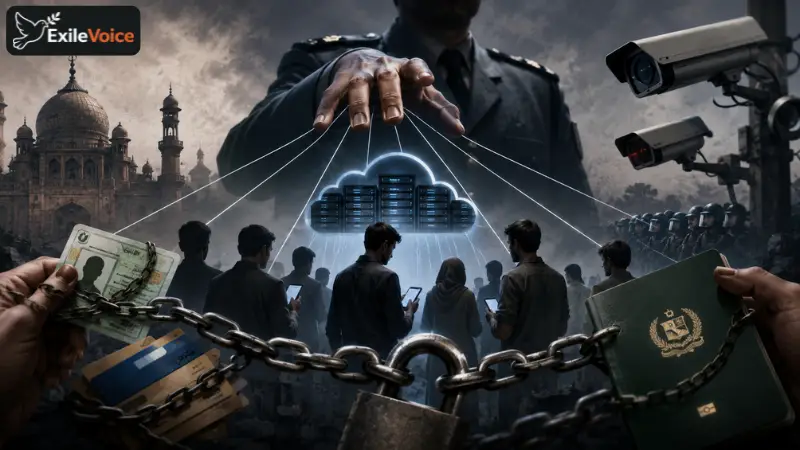
The Punjab Assembly has introduced the "Punjab Control of Habitual Offenders and Anti-Social Behavior Bill 2026," a piece of legislation that has sparked intense debate regarding civil rights and government overreach. Critics argue that the bill, despite its stated intention to curb crime and anti-social behavior, contains provisions that grant immense power to local administrative officials, specifically District Commissioners (DCs) and District Police Officers (DPOs), to restrict the movements and digital footprint of citizens without prior judicial oversight.
Under this proposed framework, individuals designated as "habitual offenders" or exhibiting "anti-social behavior" could face severe consequences, including the suspension of CNICs, passport blocking, restricted bank access, and comprehensive digital monitoring of personal devices and data. The concern, voiced during Assembly proceedings, is that this bill could be weaponized against political activists, journalists, and critics of the government.
Historical parallels have been drawn to colonial-era legislation, such as the Criminal Tribes Act of 1871 and subsequent ordinances, which were used to control populations by categorizing them as inherently problematic. Modern critics suggest this 2026 iteration replaces traditional physical surveillance with advanced digital tracking, effectively creating a "cloud-storage" version of state control. The lack of clarity regarding the definition of "anti-social behavior" remains a primary point of contention, with legal observers warning that it risks violating fundamental rights guaranteed under the Constitution if not properly moderated by the judiciary.