

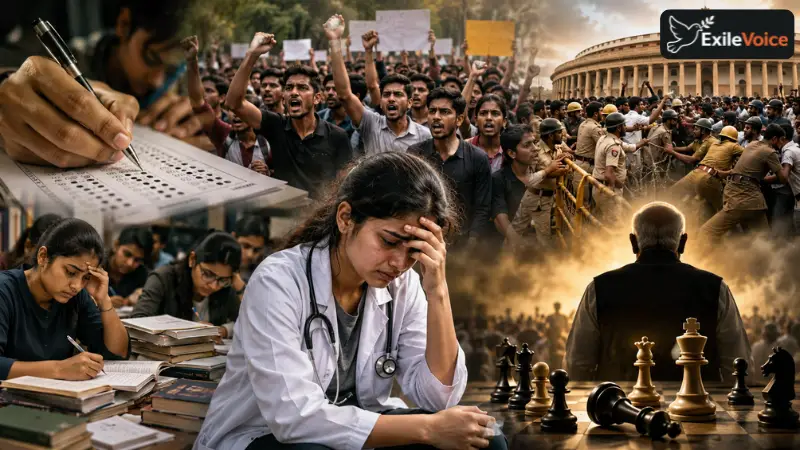
Recent developments in India have brought the National Eligibility cum Entrance Test (NEET) examination system under intense public scrutiny. The exam, which serves as the primary gateway for millions of students seeking admission into medical and dental programs across the country, faces severe challenges due to recurring paper leaks. These systematic failures have resulted in widespread emotional and financial distress for aspiring medical professionals, leading many to tragic outcomes.
The systemic flaws in the examination process ignited mass protests, hunger strikes, and civil demonstrations led by students, youth organizations, and citizens seeking accountability. Demonstrators attempting to march toward Parliament were met with heavy security responses, highlighting growing tensions between the public and state authorities. Political analysts point to broader governance changes over the past decade, including the centralization of political power, the introduction of controversial electoral funding instruments, and tightening controls over independent institutions. Observers argue that these systemic shifts have eroded traditional checks and balances, transforming the political landscape and impacting democratic opposition movements. Despite periodic electoral setbacks and shifting political coalitions, the administration continues to face mounting pressure to address systemic corruption, educational integrity, and civil liberties.

