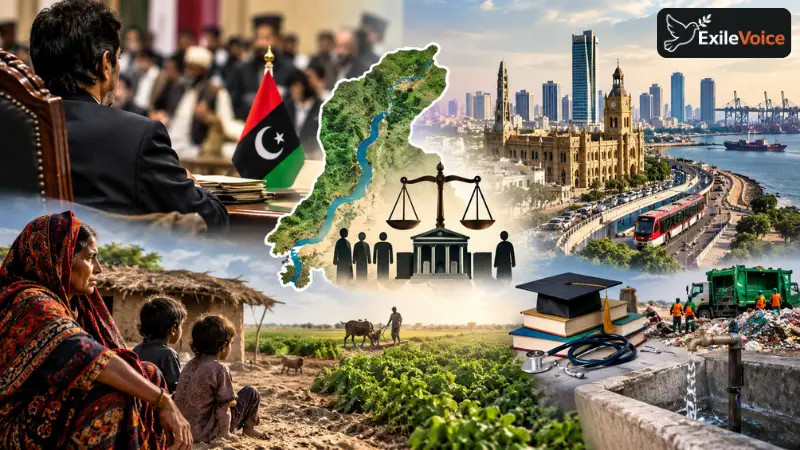
The socio-economic and political dynamics of Sindh remain a subject of intense critical inquiry, particularly concerning governance models, resource allocation, and public service delivery. Administrative performance in Pakistan's second-largest province is frequently scrutinized by political analysts, economists, and civil society advocates. At the core of this discourse is the friction between provincial autonomy, decentralized administration, and systemic inefficiencies that critics argue hinder sustainable development across both urban hubs like Karachi and marginalized rural districts.
Central to the ongoing debate is the structural impact of political hegemony maintained over successive electoral cycles. Analysts note that long-standing single-party dominance often leads to systemic inertia, where political survival supersedes merit-based governance. In Sindh, critics contend that the governance framework has devolved into a patronage-driven network, commonly referred to in regional political science discourse as a modern manifestation of feudal or wadera influence. This system allegedly concentrates administrative authority while diffusing operational accountability, creating an environment where public sector institutions struggle with transparency, recruitment integrity, and service delivery metrics.
Resource allocation and fiscal federalism represent another critical pillar of tension. Under constitutional mechanisms, substantial administrative and financial powers were devolved to provinces to foster grassroots empowerment and localized responsiveness. However, implementation challenges have sparked intense friction between provincial authorities and municipal entities, notably the Karachi Metropolitan Corporation. Observers point out that while national and provincial resource transfers flow into regional accounts, urban centers that generate a significant portion of provincial GDP frequently report chronic deficits in infrastructure maintenance, mass transit funding, clean water access, and waste management.
Furthermore, structural economic indicators across rural Sindh highlight deep disparities. Indices measuring multidimensional poverty, educational attainment, primary healthcare access, and agricultural supply chain modernization reveal stark contrasts between urban agglomerations and interior districts. Experts argue that budget allocations often fail to translate into tangible developmental outcomes due to chronic governance bottlenecks, procurement irregularities, and a lack of institutional oversight. Local government empowerment remains heavily curtailed, as provincial legislative interventions have frequently clawed back municipal powers rather than expanding grassroots democracy.
Addressing these structural challenges requires a multifaceted reform agenda anchored in institutional strengthening and fiscal transparency. Experts emphasize the necessity of empowering local governments with genuine administrative and financial autonomy, ensuring that municipal taxation and development funds are managed at the community level. Strengthening civil service recruitment through rigorous merit systems, modernizing public sector audit mechanisms, and fostering an active, protected civil society are essential steps toward reversing systemic degradation. Ultimately, sustainable progress in Sindh depends on transitioning from personalized political patronage toward inclusive, accountable, and institutionalized governance that prioritizes the socio-economic welfare of all citizens across both urban and rural landscapes.