The structural architecture of Middle Eastern geopolitics is undergoing its most profound transformation since the mid twentieth century. At the center of this shift is the aggressive diplomatic push by Washington to expand the framework of the Abraham Accords. Originally brokered during the first Trump administration to establish formal diplomatic ties between Israel and several Arab nations, the contemporary strategic directive has set its sights on larger, more ideologically fortified Islamic republics. Among these, Pakistan represents the most complex challenge and the most sought prize for Western diplomats looking to permanently alter the balance of power in South and West Asia.
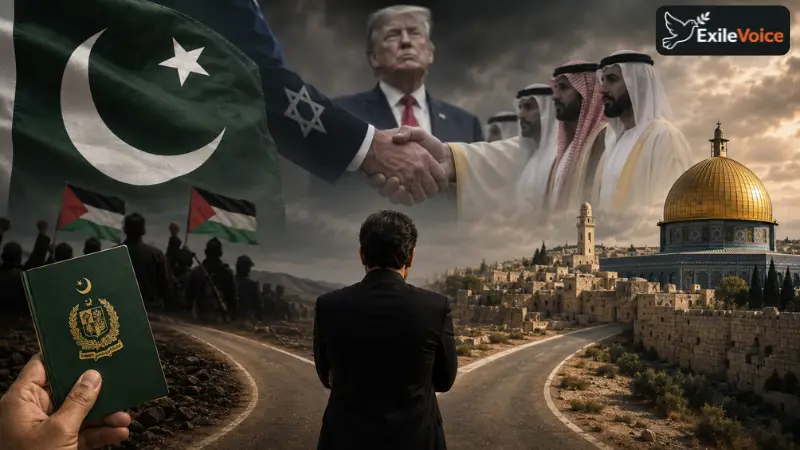
The geopolitical pressure mounting on Islamabad is not merely transactional; it strikes at the fundamental identity of the state. For nearly eight decades, Pakistan has maintained a rigid, legally institutionalized refusal to recognize Israel. This stance is woven directly into the state identity, symbolized explicitly on the cover of every Pakistani passport, which formally declares its validity for all countries except Israel. This unique statutory barrier underscores how deeply the Palestinian cause is linked to Pakistan's domestic political consensus and its constitutional framework.
The internal friction caused by Washington's normalization agenda has recently breached the surface of Pakistan's tightly controlled diplomatic core. Public remarks by Defense Minister Khawaja Asif revealed the depth of the internal debate. While acknowledging that a cornerstone of Washington's long term regional strategy involves convincing major regional players like Indonesia, Qatar, and Pakistan to join the Abraham Accords, Asif expressed sharp personal resistance. He noted that any participation in such accords would directly clash with the foundational ideological tenets of the state. He further highlighted that no official state initiatives had been taken, pointing out that a state whose formal commitments are routinely violated cannot be viewed as a dependable partner in regional peace treaties.
This candid assessment by the defense chief reflects a broader institutional anxiety within Islamabad. Normalizing relations with Tel Aviv under current conditions is seen by many inside the state as a political impossibility that could trigger severe domestic backlash. The institutional response from the Foreign Office, articulated by figures such as Ambassador Tahir Andrabi, attempts to balance this volatile topic with diplomatic caution. The institutional position remains clear: any discussion of normal relations is strictly dependent on achieving a sovereign, contiguous two-state solution based on pre 1967 borders, with East Jerusalem established as the capital of an independent Palestinian state.
This institutional red line has become even more critical due to escalating tensions surrounding the administration of holy sites in Jerusalem. Recent leaks and international investigative reports indicate a coordinated push by right wing Israeli factions to restructure the governance of the Al Aqsa Mosque compound. Historically managed under a sovereign Jordanian trusteeship since the 1967 conflict, proposals are now circulating to replace this arrangement with a centralized, multi-faith administrative agency based within Israel. Such a move would amount to an official state takeover of the sanctuary, directly impacting Islamic authorities and even placing the volume and timing of the daily call to prayer under the jurisdiction of a secular state body.
For Pakistan's foreign policy planners, these developments make the prospect of joining the Abraham Accords highly problematic. Washington's promises of financial incentives, advanced military hardware sales, and favorable treatment within international financial institutions continue to be dangled before Islamabad's cash strapped managers. Yet, the price of admission requires tearing down decades of state identity, rewriting passport regulations, and facing an angry domestic population. As Washington sharpens its diplomatic tools, Pakistan finds itself trapped between the stark realities of its economic dependency on the West and the unyielding weight of its sovereign principles.