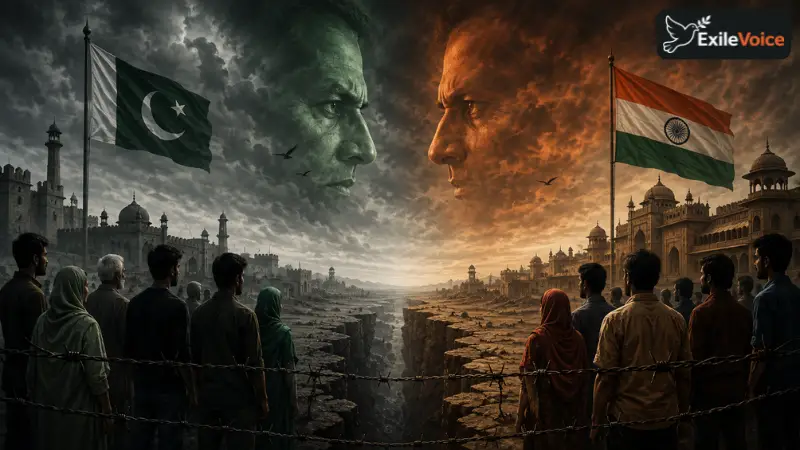
The geopolitical relationship between Pakistan and India, spanning nearly eight decades, is defined by an enduring cycle of mistrust, systemic propaganda, and unresolved historical trauma. What began with the violent partition of the subcontinent has evolved into a state of permanent friction, where the identity of one nation is often forged in opposition to the other.
Central to this dynamic is a deep-seated obsession that permeates media, culture, and governance on both sides of the border. In the 1980s and 1990s, despite the existence of an "official" narrative of enmity, there was a paradoxical period of cultural exchange, Indian films were widely watched in Pakistan, and cricket matches were characterized by a competitive parity. However, the subsequent decades, particularly following the 2008 Mumbai attacks, witnessed a stark hardening of stances.
Modern research from the Pew Research Center reflects this grim reality: a significant majority of citizens in both nations view the other as their primary adversary. This hostility is no longer just a product of political maneuvering; it is reinforced by a lack of direct, unfiltered communication. The digital divide, coupled with state-imposed bans on media outlets and digital platforms, has fueled stereotypes. Citizens on both sides now judge each other through the lens of biased media portrayals, Pakistanis through soap operas and Indians through cinema, rather than authentic human interaction.
Furthermore, the "Chanakyan" school of realism has influenced strategic alignments. India’s recent diplomatic outreach toward the Taliban in Afghanistan, a move that would seem counterintuitive given the shared religious context of the region, highlights that these conflicts are primarily about power dynamics and national interest rather than religious ideology. The ongoing lack of dialogue, contrasted with the reconciliation between other historical rivals like France and Germany or the US and Japan, suggests that without a fundamental shift in diplomatic approach and a move away from weaponized national narratives, the status quo of mutual distrust is likely to persist.