
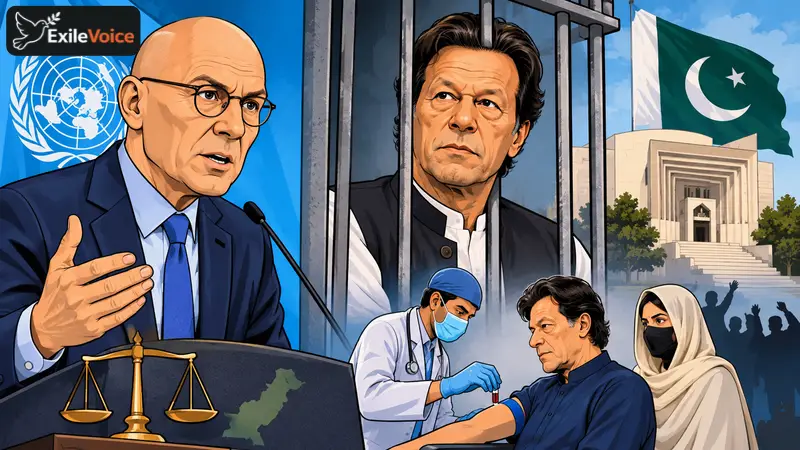
International scrutiny over Pakistan's political detention crisis intensified sharply in November 2026 after United Nations High Commissioner for Human Rights Volker Turk publicly called for the release of former prime minister Imran Khan and access to proper medical care. Speaking in a television interview on CNN, Turk urged Islamabad and opposing political actors to pursue de-escalation and treat Khan's release as a confidence-building measure to lower heightened political tensions. His remarks carried significant diplomatic weight because the UN human rights office had previously characterized Khan's detention as arbitrary and linked to political retribution, putting fresh pressure on Pakistani authorities regarding custodial standards and due process.
At the same time, government officials relayed a medical update through international media, stating that a team of doctors visited Adiala Jail to examine Imran Khan and Bushra Bibi and collected blood samples over a multi-hour session that included an eye specialist. Official accounts claimed the examination lasted roughly two to three hours before the medical team departed. However, independent verification remains a major sticking point for observers and journalists alike. Media outlets reporting the government statement noted they could not independently confirm the details on the ground, while critics and supporters argued that credibility requires direct access by family members, particularly Khan's sisters, as well as independent medical oversight rather than unilateral state assurances.
The convergence of a high-profile UN appeal and contested custodial reporting highlights how detention disputes in Pakistan extend far beyond domestic courtroom battles. When family visits and independent checks are restricted or disputed, every official claim faces immediate skepticism at home and abroad. At the same time, calls for de-escalation face steep institutional hurdles when political rivalries are deeply entrenched and trust between state institutions and opposition figures is strained.
From a broader governance perspective, the controversy underscores two persistent challenges in Pakistan's justice and rights landscape: transparency in custodial care and the political cost of prolonged pretrial or judicial detention of major opposition figures. Even when authorities release updates about checkups or specialist visits, opaque procedures fuel rumor cycles and international criticism. Meaningful de-escalation, as highlighted by international observers, depends on verifiable transparency, adherence to court orders on medical access and family contact, and credible channels for political dialogue. Whether Islamabad responds to international pressure with greater openness or treats the remarks as external interference will shape Pakistan's diplomatic standing and domestic stability in the months ahead.