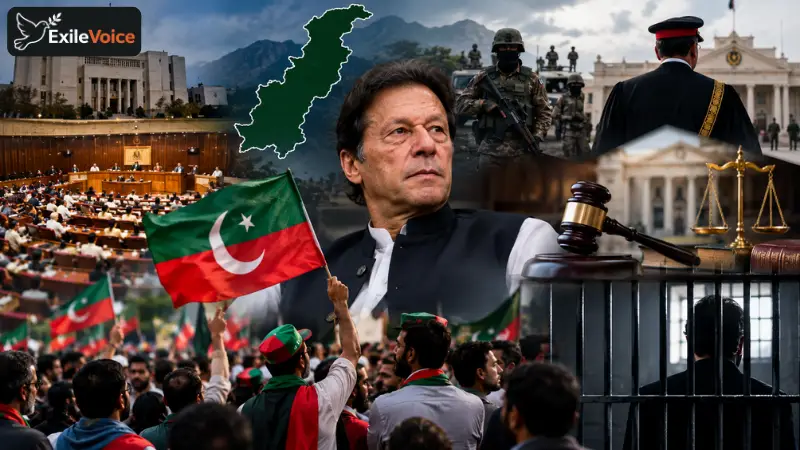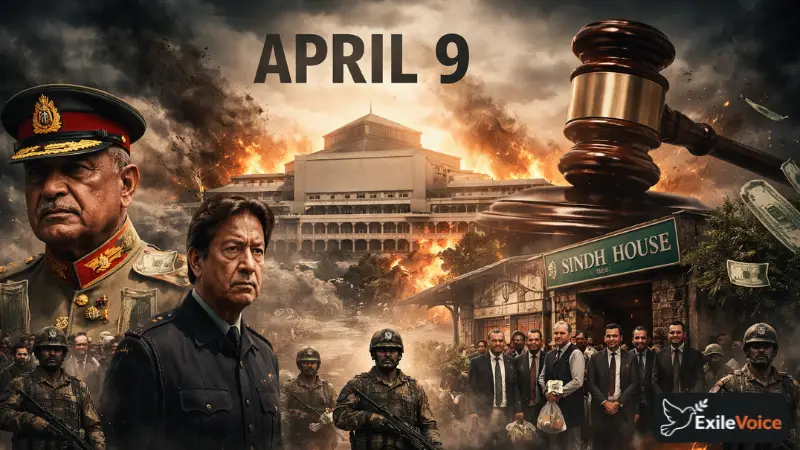
The date April 9th remains a significant and somber milestone in the contemporary history of Pakistan. Four years ago, the nation witnessed a dramatic shift in its political landscape that many observers characterize as a targeted strike against the democratic process. The removal of the Pakistan Tehreek-e-Insaf (PTI) government through a vote of no-confidence was not merely a parliamentary maneuver but, according to critics, a calculated intervention orchestrated by internal and external actors.
At the heart of this controversy is the role of the military establishment, specifically under the leadership of General Bajwa. The narrative suggests that a deliberate effort was made to portray the then-government as detrimental to regional interests, particularly those of the United States. This external pressure was allegedly coupled with internal political engineering, where substantial funds were utilized to influence the loyalties of lawmakers. The "Sindh House" incident became a symbol of this alleged horse-trading, where the mandate of the people was purportedly traded behind closed doors.
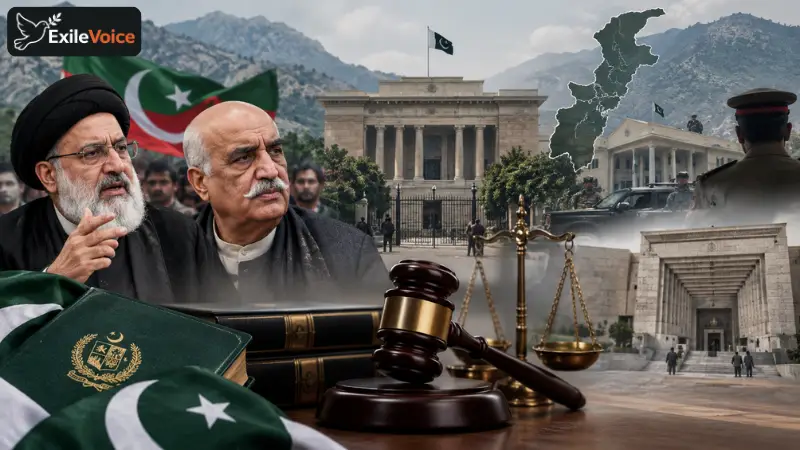
The judicial response during this period has also faced intense scrutiny. The decisions made by the Supreme Court on that fateful night are often viewed as a failure to uphold constitutional integrity. Instead of acting as a bulwark against extra-constitutional maneuvers, the judiciary is accused of facilitating a transition that pushed Pakistan into a period of deep instability. This era, termed by some as the beginning of "Form 47 Military Raj," has been marked by a perceived rollback of civil liberties and the imposition of a governance model that prioritizes the interests of the elite over the welfare of the masses.
As the nation reflects on these events, the focus remains on the resilience of democratic institutions. The transition to what has been dubbed "Purana Pakistan" (Old Pakistan) has brought with it a return to traditional power dynamics, characterized by extensive VIP protocols and a perceived disconnect from the economic realities faced by the general population. The ongoing struggle for democratic restoration continues to be defined by the demand for free and fair elections, where the will of the people is the ultimate arbiter of power.