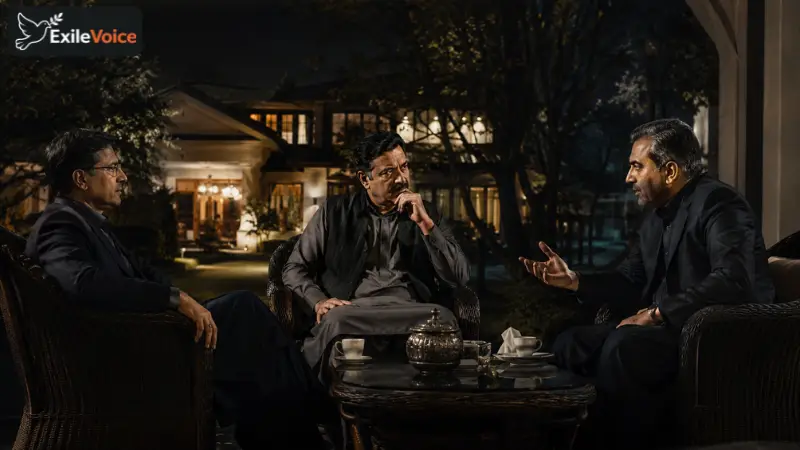
A quiet residential pocket in Peshawar recently became the unexpected focal point of Pakistan's shifting political landscape. Rumors and whispers of a high-stakes, behind-the-scenes encounter had circulated within political and media circles for days before exploding into public discourse. The confirmation came from an unexpected source: Aleema Khan, the sister of imprisoned former Prime Minister Imran Khan. Her social media intervention verified that a meeting did indeed occur at the Peshawar residence of Barrister Gohar Ali Khan, the Chairman of Pakistan Tehreek-e-Insaf (PTI).
The participants included Barrister Gohar, Sohail Afridi (the Chief Minister of Khyber Pakhtunkhwa), and Mohsin Naqvi, the powerful Federal Interior Minister. Naqvi is widely recognized in contemporary Pakistani politics as a crucial bridge and de facto representative of the military establishment, particularly linked to Chief of Army Staff General Asim Munir.
The disclosure immediately triggered an intense wave of speculation across the political spectrum, with analysts asking a poignant question: Has Sohail Afridi adopted the controversial governance and reconciliation model of his predecessor, Ali Amin Gandapur?
During his political tenure, Gandapur maintained highly close, cooperative ties with Mohsin Naqvi. He frequently defended Naqvi in internal party meetings as a facilitator of political relief, a stance that drew mixed reactions from the PTI rank and file. For a party whose core narrative is built on resistance against structural overreach and the military establishment, any backroom interaction with key administration figures is met with deep skepticism.
The strategic dynamics of this meeting illustrate the profound dilemma facing the PTI leadership. The party finds itself under unprecedented administrative pressure. Its founding chairman remains incarcerated; his spouse is similarly detained, and hundreds of political workers face ongoing legal challenges. In any severe political conflict, backchannel negotiations are an inevitable reality. When one party holds structural dominance, political entities must engage with the actual centers of power to secure institutional relief. However, effective political strategy requires a delicate balance between backchannel dialogue and public pressure.
Currently, the avenue for public pressure appears heavily restricted. The party’s street agitation has slowed due to severe state crackdowns, leaving its leadership to look for alternative forms of leverage. Observers note that the provincial government of Khyber Pakhtunkhwa possesses considerable economic and administrative tools. These include the management of surplus budgets and tactical delays in provincial financial alignments, which could create leverage amidst Pakistan's ongoing negotiations with the International Monetary Fund (IMF). Utilizing these formal administrative levers to bargain for constitutional rights and the safety of party leadership remains a valid, albeit unexecuted, strategy.
Sohail Afridi’s post-meeting communication strategy reveals internal friction within the party's narrative machine. Initially, when questioned about potential contacts with the establishment to secure relief or medical access for Imran Khan, the Chief Minister provided a pragmatic response, stating he would meet anyone necessary to advance the party leader's welfare. Yet, as public scrutiny intensified following Aleema Khan’s confirmation, Afridi issued a defensive clarification. He argued that the meeting was strictly official, focused entirely on the deteriorating law and order situation in the province, specifically referencing recent security incidents in Bannu. He explicitly denied that any discussions regarding Imran Khan's release or legal relief took place.
This explanatory shift places Afridi in a challenging political position. If the meeting was a standard administrative consultation between a provincial Chief Minister and the Federal Interior Minister regarding counter-terrorism, its secretive nature, nocturnal timing, and location at a private residence raise significant questions. Standard official meetings regarding provincial security are typically held in formal state offices, accompanied by official press releases and photographic documentation. The decision to keep the meeting hidden until media leaks forced a disclosure suggests that the agenda carried a far heavier political weight than a routine security review.
Furthermore, the public disconnect between the party's formal structure and Imran Khan's family highlights a deeper institutional challenge. By publicly clarifying that no member of the Khan family participated in the meeting, Aleema Khan successfully insulated the family from potential political blowback or state-sponsored misinformation campaigns.
The episode underscores a fundamental truth about Pakistan's current political trajectory: despite the public rhetoric of absolute defiance, structural realities are forcing a quiet, complicated dialogue between the provincial governance of PTI and the federal military establishment. Whether these secretive interactions will yield tangible relief for Imran Khan or result in the gradual co-optation of the provincial leadership remains one of the most critical questions defining the country's immediate political future.