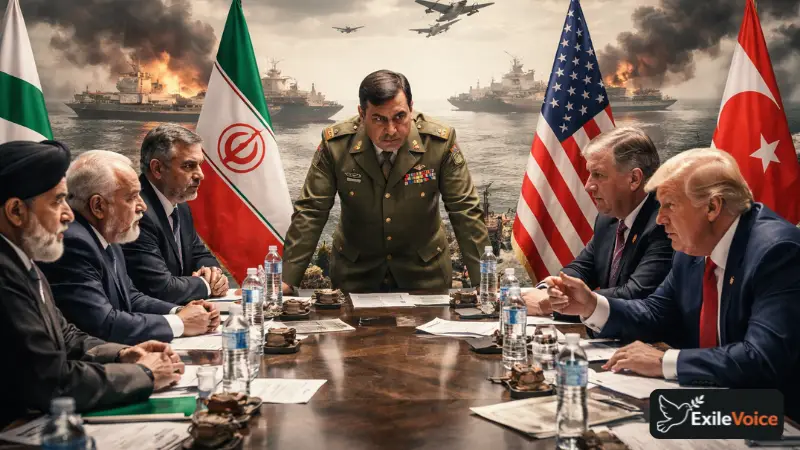
The intricate web of Middle Eastern diplomacy has faced a significant setback as the latest mediation efforts led by Pakistan have failed to bridge the widening chasm between Iran and the United States. Despite high stakes and intense pressure from the Trump administration, the attempt by Pakistani leadership to facilitate a peace dialogue has been met with a firm "no" from Tehran. This breakdown underscores the limitations of regional intermediaries in a conflict characterized by deep-seated ideological differences and extreme rhetoric.
The mediation attempt was spearheaded by Pakistan’s military leadership, often referred to colloquially in local political circles as "Buta." Reports indicate that these efforts involved exhaustive negotiations with Iranian officials, specifically targeting a framework for a ceasefire or a cooling-off period. However, the Iranian state news agency, IRNA, formally rejected the proposal. Iran’s stance remains uncompromising: they are seeking permanent solutions rather than temporary pauses. Tehran’s demands include the permanent lifting of economic sanctions, formal reparations for past damages, and guaranteed safe passage in the Strait of Hormuz, rather than a mere 45-day "partial" ceasefire that they believe primarily benefits regional neighbors like Turkey, Qatar, and Pakistan.
The failure of this diplomatic mission has significant ramifications for the Trump administration’s "maximum pressure" strategy. In a recent press conference, President Trump displayed a volatile mix of aggression and casual disregard for traditional diplomatic norms. He explicitly threatened Iranian civilian infrastructure, claiming that he could "take out" the entire country in a single night. Such rhetoric has escalated tensions to a point where even humanitarian organizations like the World Health Organization (WHO) have voiced alarm. Scientists warn that any strikes on Iranian nuclear or energy facilities could result in catastrophic radiation leakage, affecting not just Iran but neighboring allies like Kuwait and Qatar, and potentially reaching as far as Pakistan.
Meanwhile, the internal dynamics within the U.S. administration appear increasingly chaotic. The President’s casual handling of deadlines, extending them on a whim due to holidays like Easter, suggests a lack of a coherent long-term strategy. This unpredictability has led to a sense of "Alice in Wonderland" diplomacy, where threats of total destruction are interspersed with dismissive comments about international laws. The contrast between these threats and Iran's strategic maneuvering in the Strait of Hormuz highlights a growing parity in geopolitical leverage. The New York Times recently noted that Iran is emerging as a "major power" precisely because of its ability to control this vital maritime chokepoint, effectively challenging the traditional tri-polar world order of the U.S., Russia, and China.
For Pakistan, the failure of this mediation is a double-edged sword. While it attempted to position itself as a "great negotiator," the inability to deliver a result exposes the fragility of its influence over Tehran. As the shadow of war looms larger, the regional players must now grapple with the reality that the "Failed Marshal" approach has left the diplomatic field more polarized than before. The focus now shifts back to the frontlines, where Israel continues its own agenda in Gaza and Lebanon, further complicating an already explosive situation.