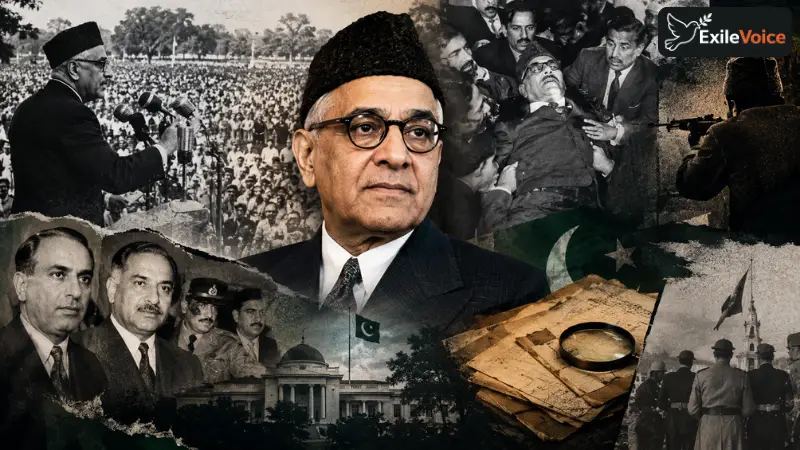
Seventy-five years after the tragic assassination of Pakistan’s first Prime Minister, Liaquat Ali Khan, the circumstances surrounding his death remain shrouded in mystery and political intrigue. On October 16, 1951, while addressing a massive crowd of approximately 100,000 people at Company Bagh (now Liaquat Bagh) in Rawalpindi, Khan was struck down. As he began his speech with the words "Biradaran-e-Millat," gunshots rang out, instantly altering the trajectory of Pakistan's political history.
The official narrative propagated for decades points to a lone gunman named Said Akbar, an Afghan national and former military man, who was subsequently shot dead at the scene. However, meticulous archival examination, forensic reports, and witness testimonies reveal profound contradictions that point toward a high-level state cover-up and institutional conspiracy.
In the weeks preceding his death, Liaquat Ali Khan was navigating a tense geopolitical and domestic landscape. He had recently confronted the American ambassador regarding U.S. pressure over the Korean War and a lack of support on the Kashmir dispute, hinting at a potential shift toward the Soviet Union during the height of the Cold War. Domestically, his administration had faced the Rawalpindi Conspiracy Case earlier that year in March, marking the first attempted military coup by elements dissatisfied with the Kashmir ceasefire. Furthermore, Khan had moved to dismiss key figures within his cabinet and bureaucracy, including Finance Minister Ghulam Mohammad and Interior Minister Mushtaq Gurmani.
Forensic analysis and eyewitness accounts from key officials, such as Deputy Commissioner James Hardy, Military Secretary Lt. Col. Chirag Hussain, and Political Secretary Nawab Siddiq Ali Khan, dispute the official claim that shots were fired exclusively from the front. Instead, medical notes and witness statements indicate that Khan was struck from behind, raising serious questions about the identity and motives of the shooters.
In the immediate aftermath of the assassination, political maneuvering quickly reshaped the government. Dismissed ministers Ghulam Mohammad and Mushtaq Gurmani convened a meeting on the very evening of Khan’s death before his burial, engineering a political realignment that elevated Ghulam Mohammad to Governor-General and Khawaja Nazimuddin to Prime Minister. Meanwhile, official investigative bodies, such as the Munir Inquiry Commission and the police report led by Superintendent Choudhry Mohammad Hussain, faced systemic obstruction, redactions, and mysterious losses of documents, including the crash of an aircraft carrying the primary police report.
Ultimately, the assassination of Liaquat Ali Khan marked a critical turning point for Pakistan, shifting power from civilian leadership to bureaucratic and military autocracy. The failure to deliver transparent justice and the systematic suppression of investigative records continue to cast a long shadow over the nation's democratic evolution.