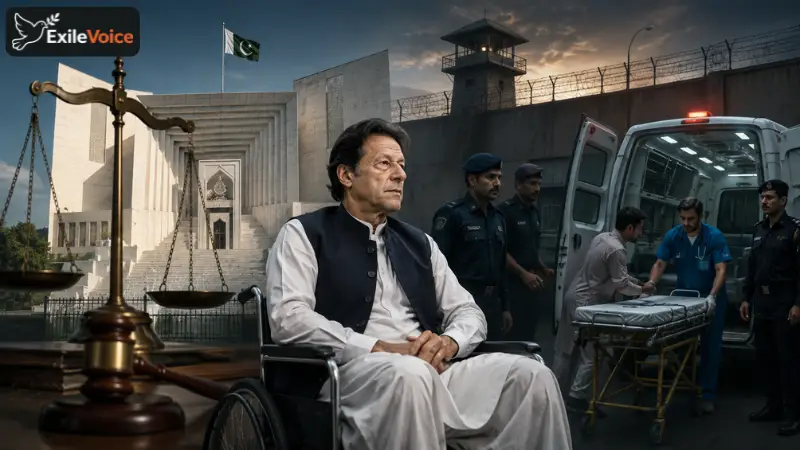
In a significant development for Pakistan's political landscape, the Supreme Court has issued a directive that could mark a turning point in the ongoing saga surrounding former Prime Minister Imran Khan. Following a session led by Justice Shahid Waheed, the apex court has mandated that the state authorities transfer Imran Khan from Adiala Jail to the Shifa International Hospital in Islamabad within the next 48 hours. This order comes as a response to growing concerns regarding the former Prime Minister's health, which have been a subject of intense speculation and debate among his supporters, family, and legal team.
For over a year, advocates for Mr. Khan have been calling for an independent medical assessment, citing concerns that his conditions in solitary confinement and restricted access to his personal doctors were insufficient for a leader of his stature. The court’s decision to mandate a transfer to a reputable facility like Shifa International is seen by many as a vital step in addressing these concerns. The court’s involvement has been interpreted by observers as a rare instance of judicial intervention in a high-profile political case, highlighting the court's role in balancing executive authority with the fundamental rights of high-profile detainees.
The move has triggered a whirlwind of reactions. Supporters of the Pakistan Tehreek-e-Insaf (PTI) have welcomed the news with relief, viewing it as a necessary measure to ensure the well-being of their leader. Conversely, government representatives have expressed skepticism, suggesting that the court’s order may fall outside the standard protocols for a convicted individual. This divide underscores the broader systemic tensions within Pakistan's political and legal institutions. As the clock ticks down toward the 48-hour deadline, the focus remains on the logistical execution of this transfer and the subsequent medical evaluation, which is expected to be conducted by a newly formed, independent board.
This event is not merely a healthcare concern; it is a barometer for the current state of judicial independence in Pakistan. Critics and supporters alike are watching closely to see how the state handles this transfer. It raises critical questions about the intersection of law, medicine, and political necessity, and whether this move signals a broader shift in the way political prisoners are treated within the judicial system. As the country awaits the final medical assessment, the incident serves as a stark reminder of the volatile and evolving dynamics that continue to shape Pakistan’s socio-political environment.