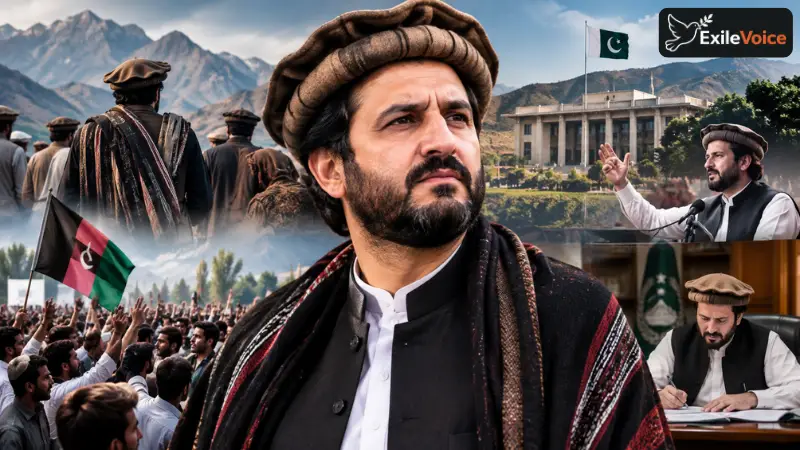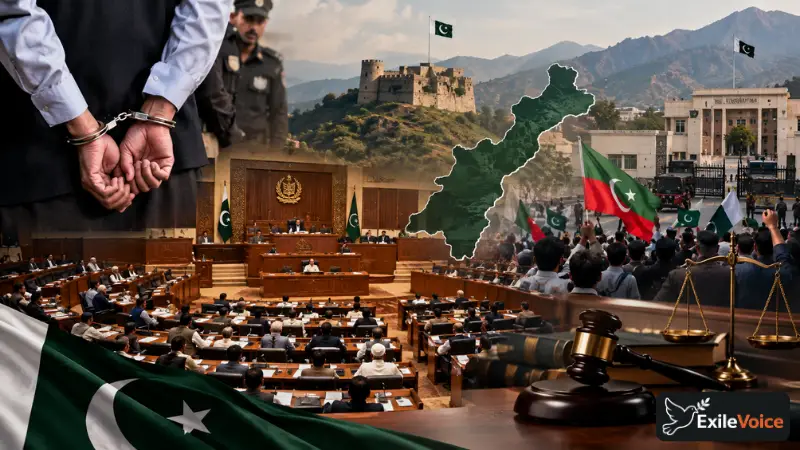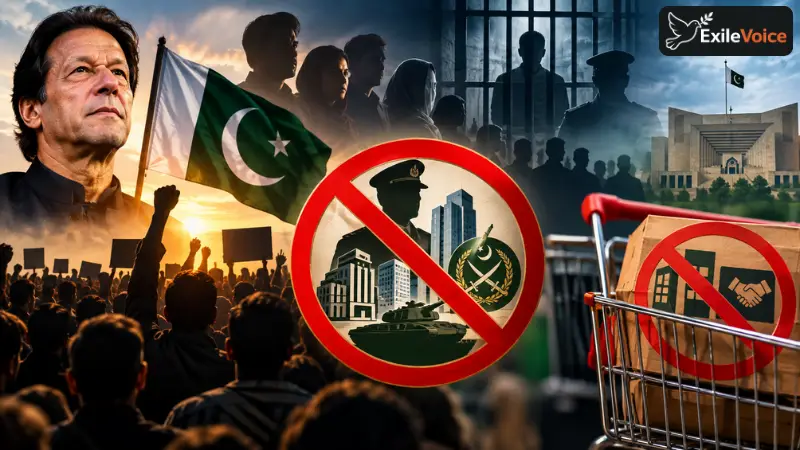
The political landscape in Pakistan has experienced a severe escalation following coordinated state actions targeting the family members and close associates of former Prime Minister Imran Khan. Reports indicate that high-profile detentions, including prominent political figures and family members, have intensified under administrative detention orders such as the Maintenance of Public Order. These developments have triggered widespread concern regarding civil liberties, governance, and the rule of law across various regions, including Punjab and Khyber Pakhtunkhwa.
In response to these developments, political commentators and opposition voices have advocated for structured civic resistance, emphasizing non-violent and lawful methods of expression. A central proposal emerging from these discussions is a comprehensive social and economic boycott directed against commercial entities, institutions, and corporate structures affiliated with military and state-backed foundations. Proponents of this strategy argue that targeted economic non-cooperation serves as a viable, constitutional mechanism to register dissent without resorting to physical confrontation or violating legal statutes.
Furthermore, the broader security environment remains volatile, with reports of civil unrest, administrative challenges in peripheral provinces, and heightened tensions along regional borders. Analysts suggest that the protracted timeline of planned political demonstrations has provided state authorities ample opportunity to preemptively neutralize organizational networks, highlighting the tactical necessity for agile planning and unified civic resolve.