
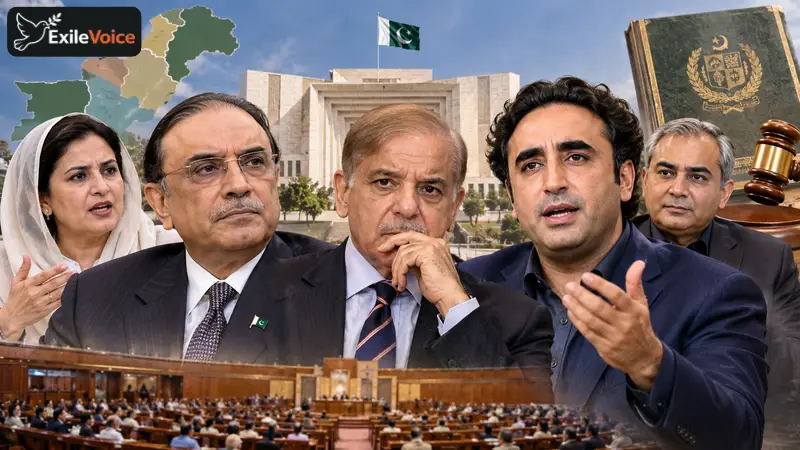
High-level political consultations in Islamabad involving Pakistan Peoples Party co-chairman Asif Ali Zardari, Prime Minister Shehbaz Sharif, and Interior Minister Mohsin Naqvi have placed the question of new provinces and an impending constitutional amendment back at the center of national politics. Discussions surrounding administrative reorganization and potential constitutional restructuring have gained momentum alongside a series of high-profile television interviews featuring Bilawal Bhutto Zardari. The coverage of these interviews has sparked intense debate across political circles because the broadcasts have aired repeatedly on channels widely viewed as closely aligned with powerful establishment figures, while combining tough questions with softer line items.
Tensions within the ruling coalition are becoming harder to conceal as disagreements over strategy and communication sharpen. PPP leader Shehla Raza publicly criticized the Pakistan Muslim League-Nawaz for remaining silent on the issue of new provinces, arguing that PML-N is avoiding clear policy commitments while seeking to use the PPP for political leverage. Such friction highlights the delicate balancing act required whenever constitutional amendments or territorial redrawing enter Pakistan's political arena, where provincial autonomy, representation, and coalition bargaining carry high stakes.
Even as senior leaders meet behind closed doors, observers expect immediate public statements from such gatherings to remain cautious and non-committal. Substantive decisions on constitutional changes or new administrative units rarely emerge in full detail from a single meeting; instead, they tend to unfold gradually through backchannel negotiations, media signaling, and shifting alignments among key power brokers. Whether Bilawal Bhutto Zardari's assertive media posture intensifies or moderates in the coming days will serve as an important barometer of how much genuine consensus exists around the proposed constitutional path.