
PPP Chairman Bilawal Bhutto Zardari became the focal point of intense political and media scrutiny following a rapid sequence of major television interviews across prominent news channels, sharp exchanges over constitutional red lines and provincial governance, and the circulation of an alleged obscene video online that supporters and commentators condemned as fabricated. The convergence of prime-time broadcast appearances and digital character assassination illustrated the volatile media environment in Pakistan.
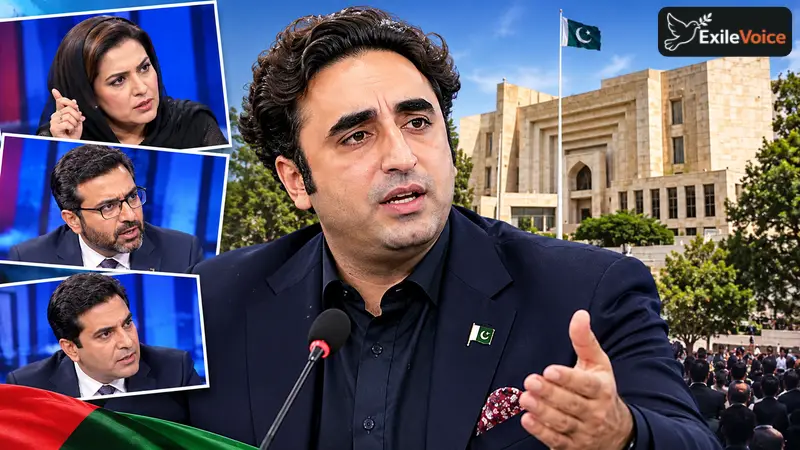
In back-to-back interviews hosted by anchors including Asma Shirazi, Waseem Badami, and Shahzeb Khanzada, Bilawal addressed contentious constitutional and political questions. Discussions touched upon the 27th Constitutional Amendment, debates around the constitutional court, the balance of executive authority, reserved seats, and whether pushing for forced referendums or ignoring coalition allies' proposals could trigger severe political and administrative crises.
The interviews also featured pointed questioning over political legitimacy, electoral grievances, and past events such as May 9, alongside heated exchanges between Bilawal and interviewers over provincial development and media neutrality. Critics and commentators scrutinized both Bilawal's shifting or nuanced positions on institutional arrangements and the manner in which anchors framed questions when opposing political viewpoints were not directly represented on the panel.
Shortly after these high-profile appearances, an explicit video allegedly depicting Bilawal circulated widely on social media platforms. The clip was swiftly denounced as fake or manipulated and characterized as a targeted smear campaign aimed at damaging his public standing and personal reputation.
The episode revived broader concerns about the weaponization of doctored or non-consensual intimate media in Pakistani politics. Over recent years, political figures across party lines have warned that leaked or fabricated videos are increasingly deployed as instruments of intimidation and reputation damage rather than substantive political debate.
Alongside the viral video controversy, digital commentary and critical broadcasts also revived allegations regarding past assets, business associations, and foreign ministry performance. Taken together, the intense media coverage, sharp policy disagreements, and online smear tactics highlighted a turbulent moment in Pakistan's political communication landscape.