
Heightened security incidents in Balochistan and Azad Kashmir coincided with fresh controversy over the detention of senior journalist Shahid Maitla and competing narratives from officials and political figures. Reports of militant activity, clashes, and governance challenges across restive regions added urgency to debates over state authority, rule of law, and public communication.
In Balochistan, remarks by former military official General Qadir Baloch reignited serious allegations regarding security conditions and extortion payments to militant groups such as the Balochistan Liberation Army. By lending weight to claims previously raised by Sardar Abdul Rehman Khetran that local authorities or security arrangements pay extortion to avert attacks on key figures, the statement raised troubling questions about state control and the risk of a state within a state. Such allegations strike at the core of public confidence in security and administration across the province.
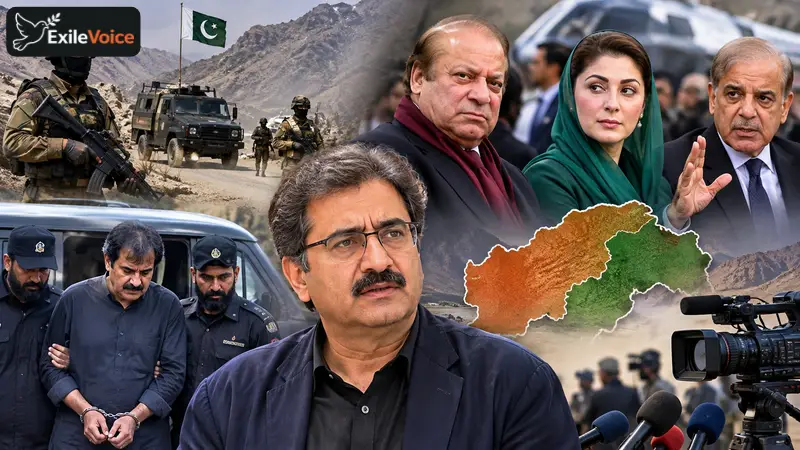
Developments in Azad Kashmir also drew sharp scrutiny after reports of a Rangers official losing his life in firing and four militants being killed in retaliatory action, alongside heightened tension and protests. Shortly after violence and unrest were reported, PML-N leaders including Nawaz Sharif, Maryam Nawaz, and Shehbaz Sharif traveled by helicopter to Muzaffarabad for a public appearance and speech. Observers viewed the visit as an effort to project political alignment and shoulder administrative messaging amid sensitive security and governance pressures, even as light banter among the PML-N leaders during their remarks drew public attention.
Meanwhile, official media messaging faced criticism from commentators who argued that morning media tickers focused heavily on external narratives such as Indian intelligence controversies and selective commentary rather than addressing domestic security crises and public accountability in clear terms.
The transfer of senior journalist Shahid Maitla by NCCIA authorities toward Balochistan following a transit remand triggered widespread concern among journalists and rights advocates. Former caretaker prime minister Anwaar ul Haq Kakar publicly stated on social media that the action followed his complaint over a tweet directed at him, prompting sharp criticism from commentators who condemned using state legal mechanisms against journalists over online criticism. Together, these events underscored deep tensions surrounding press freedom, accountability, and security management.