
Sharp exchanges between leaders of the Pakistan Peoples Party and the Pakistan Muslim League Nawaz exposed growing friction over power sharing, constitutional offices, and the creation of new administrative provinces. Following recent remarks by Bilawal Bhutto Zardari that unsettled coalition dynamics, senior PML-N figures moved swiftly to challenge his framing and reassert their own political stance.
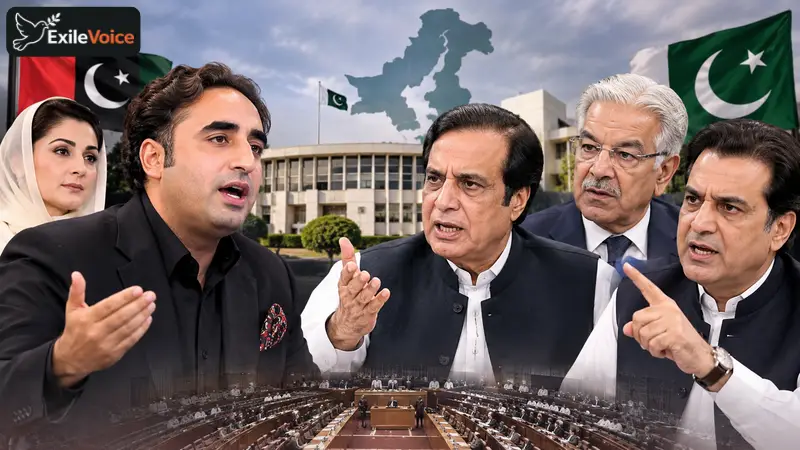
Punjab Assembly Speaker Malik Ahmad Khan delivered a pointed response to Bilawal Bhutto Zardari's speech, questioning warnings of bloodshed and ethnic nationalism and asking who was threatening whom. Malik Ahmad Khan highlighted what he described as a double standard on administrative restructuring, asking why dividing Punjab into new provinces is treated differently from Sindh and defending a constitutional referendum on the issue. His remarks underscored a firm push by PML-N leadership to keep the creation of new provinces firmly on the political agenda.
Khawaja Asif added pressure from another angle, arguing that a party holding a stake in the existing governance arrangement cannot simultaneously position itself as an opposition critic demanding a system reset. Asif maintained that political actors must own both the benefits and the drawbacks of the system in which they participate rather than distancing themselves when convenient.
Talal Chaudhry went further in attacking the contradiction between Bilawal Bhutto Zardari's rhetoric and the PPP's institutional footprint. Pointing out that the PPP governs in Sindh, holds key constitutional positions, exercises influence through governor rule in Khyber Pakhtunkhwa, and aligns with provincial setups where power is shared, Talal Chaudhry argued that Bilawal cannot credibly claim distance from the governing structure or take sole credit for constitutional court developments while suddenly shifting posture. Meanwhile, the Election Commission of Pakistan rejected Bilawal Bhutto Zardari's allegations regarding reserved seats, asserting that decisions on reserved seats were taken in accordance with the law and Constitution.
Commentators and political rivals also weighed in on the broader consequences of past political alignments. Analysis circulating in political circles noted that weakening judicial independence, press freedom, and democratic norms over time leaves fewer institutional shields when disputes reach a party's own electoral base or political standing. Questions were also raised about internal cohesion within the PPP over provincial restructuring and whether allies would hold firm under pressure. Meanwhile, reconciliation between Khosa and Salman Akram Raja drew attention for easing an internal dispute, even as observers debated consistency in public statements and political messaging.