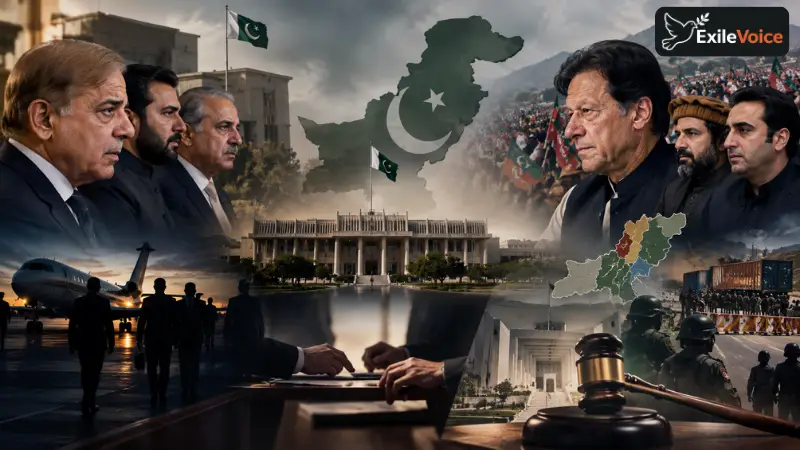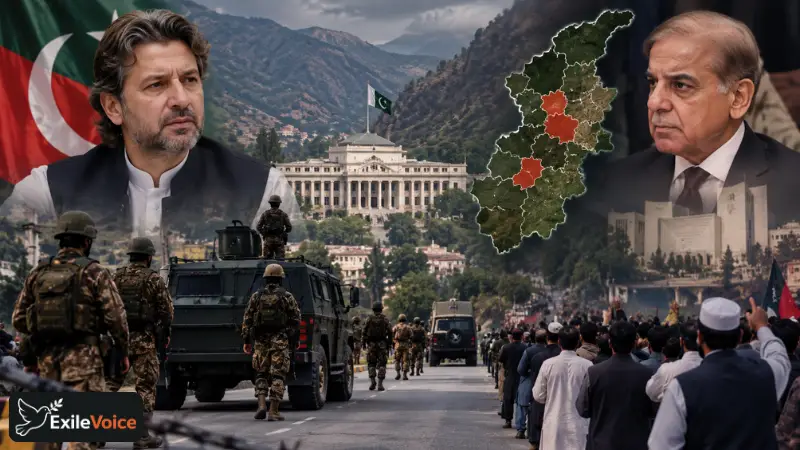
The political landscape in Pakistan has entered a critical and volatile phase following the declaration of an emergency across twelve districts in the Khyber Pakhtunkhwa province. This sudden and drastic administrative move has escalated tensions between provincial leadership and federal authorities, creating profound uncertainty about governance, security, and the rule of law in the region. Political analysts and commentators have closely monitored these developments, noting that the imposition of emergency measures reflects deep structural fractures within the current political system.
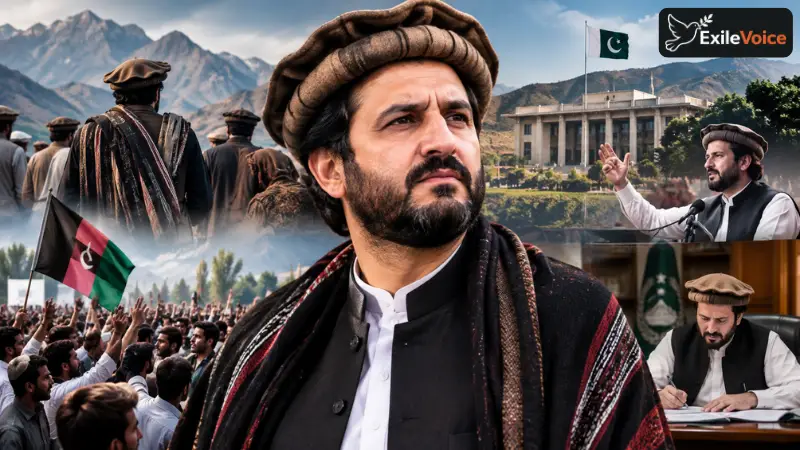
At the center of these developments is the provincial administration led by figures aligned with Pakistan Tehreek-e-Insaf, notably chief ministerial leadership under Sohail Afridi, facing intense pressure from federal forces and administrative bodies. Reports from the ground indicate heightened security deployments, including police and military presence, aimed at curtailing mass mobilization and public demonstrations. Critics of the federal government argue that these restrictive measures represent an overreach of executive power designed to dismantle regional political opposition. Conversely, supporters of federal intervention maintain that exceptional security challenges and public safety concerns necessitate extraordinary measures to restore order and prevent widespread civil unrest.
The timing of this crisis coincides with broader national debates concerning governance legitimacy, constitutional boundaries, and civil military relations. The potential implementation of governor rule in the province has sparked fierce debate among constitutional experts, who question whether such a step complies with democratic norms or constitutes an assault on provincial autonomy. As political actors maneuver for strategic advantage, the citizenry of Khyber Pakhtunkhwa bears the brunt of communication blackouts, restricted movement, and economic disruption. The coming days will likely determine whether political leaders can find a negotiated path forward or if the confrontation will deepen into a prolonged institutional deadlock with lasting ramifications for Pakistan's democratic trajectory.