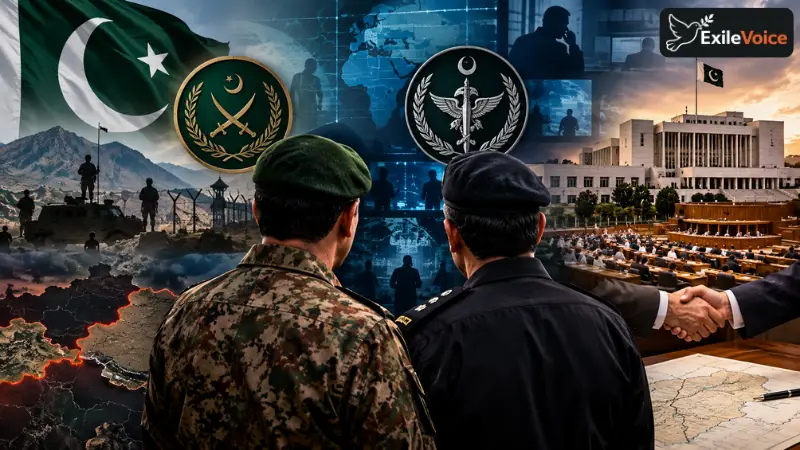
The operational relationship between Pakistan's military establishment and political institutions remains the cornerstone of the nation's governance framework. Within this complex ecosystem, internal structural dynamics between key intelligence agencies, notably Military Intelligence (MI) and the Inter-Services Intelligence (ISI), dictate both national security policy and internal political management. While publicly presenting a unified front, the structural roles and jurisdictional overlap between these entities frequently lead to competition for strategic influence.
Military Intelligence primarily focuses on internal troop discipline, immediate military security, and tactical threats facing the armed forces. In contrast, the Inter-Services Intelligence operates with a broader mandate that encompasses external intelligence, counter-espionage, and deep engagement in domestic political surveillance. When internal political stability wavers, the boundaries between these mandates often blur. This overlap creates friction regarding how political dissent, regional security in provinces like Khyber Pakhtunkhwa, and high-profile opposition movements should be addressed.
The current geopolitical climate further complicates this dynamic. With elevated instability along the western border and broader regional shifts in the Middle East and South Asia, the security apparatus faces simultaneous pressure from external threats and internal political volatility. In managing domestic political challenges, such as provincial pushback from opposition-led regional governments, military leadership relies heavily on coordinated intelligence reporting. However, competing assessments between security branches can result in mixed policy signals, impacting federal decision-making.
Moreover, the appointment and tenure of top military and intelligence officials remain deeply intertwined with executive politics. Political administrations routinely seek alignment with military commanders to secure governance longevity, while the security leadership prioritizes institutional integrity and national stability above short-term political mandates. This perpetual balancing act shapes judicial proceedings, executive appointments, and state security directives.
A thorough evaluation of Pakistan's security apparatus reveals that internal institutional equilibrium is essential for overall national stability. As the state navigates socio-economic hurdles and political polarization, the ability of its intelligence infrastructure to balance domestic political oversight with core defense mandates remains critical to maintaining state cohesion.