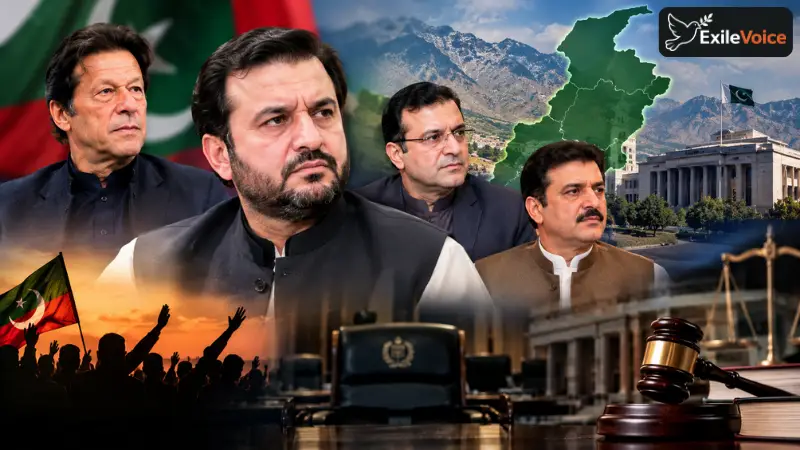
The political landscape of Khyber Pakhtunkhwa (KP) has reached a crucial inflection point as intense speculation surrounds the tenure of Chief Minister Sohail Afridi. Media leaks and investigative reports have ignited discussions across major Pakistani television networks regarding whether PTI leadership is actively considering an immediate political restructuring in the province. Reports originating from media outlets such as ARY News suggested that internal communications delivered via legal representatives, including Salman Safdar, conveyed instructions for Sohail Afridi to step down due to alleged performance shortfalls regarding party welfare. Additional claims pointed toward potential moves involving Ali Amin Gandapur or provincial minister Fazal Shakoor as candidates for the executive post.
However, a deeper structural analysis reveals that these narrative pushes are part of a sophisticated political signaling strategy. When media networks closely aligned with establishment interests leak sensational reports about internal party rifts, public consensus often shifts toward defending the targeted political figure. Rather than serving as an isolated critique of Sohail Afridi, these leaks function as indirect pressure directed toward the governing coalition consisting of the PML-N and PPO. The broader objective behind promoting political volatility in KP centers on compelling ruling parties to accept institutional restructuring, including proposals for technocratic governance models or national administrative realignments.
The narrative surrounding potential candidates like Fazal Shakoor underscores this strategic depth. Having previously maintained affiliations across political lines including the ANP and JUI-F before joining PTI, Shakoor represents a non-aggressive, electable politician with a localized voter base. Media floating his candidacy serves to gauge party reactions and signal that moderate alternatives are available should radical political posturing lead to systemic stalemates. Concurrently, reports detailing narcotics charges against individuals connected to provincial cabinet members and discussions regarding potential constitutional emergency measures illustrate the multifaceted pressure applied to reshape the political trajectory of the region.
The family of PTI's founding leadership has formally issued statements denying any internal directive calling for Sohail Afridi's resignation. They emphasized that recent legal visits contained no such demands and described rumors of internal no-confidence motions as fabricated distraction attempts. Meanwhile, family members of imprisoned leadership, including Qasim Khan in international media engagements, continue to highlight human rights conditions, lack of visitation rights, and systemic crackdowns on dissent. As the date for scheduled political marches approaches, the media narrative around the KP Chief Minister serves as a critical barometer for measuring power dynamics between provincial authorities, federal ruling parties, and institutional decision-makers.