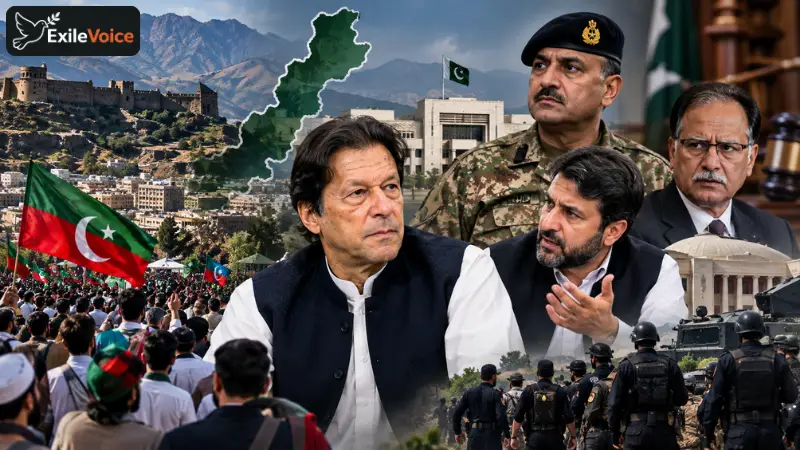
The political landscape in Khyber Pakhtunkhwa (KP) has reached a critical boiling point as rumors and conflicting reports surrounding the potential imposition of Governor Rule or a state of emergency under Article 234 of the Constitution continue to intensify. This political uncertainty unfolds against a backdrop of escalating tensions between federal authorities, the military establishment, and the ruling Pakistan Tehreek-e-Insaf (PTI) administration in the province.
Recent developments show a dramatic narrative shift within mainstream media and political analysis circles. Prominent analysts who previously dismissed rumors of Governor Rule as unfounded fabrications have reversed their assessments. Earlier assertions indicated that top national security officials rejected emergency measures in favor of integrating the opposition into the national mainstream. However, updated appraisals suggest that military and federal leadership may be seriously evaluating invoking Article 234 in KP to regain administrative and operational control over the region.
Several critical factors drive this heightening political confrontation. A major source of contention involves proposed reformative legislation targeting the provincial police apparatus. In past governance cycles, the provincial government established measures designed to minimize political interference within law enforcement, granting the Inspector General of Police (IGP) operational autonomy. While intended to professionalize the force, federal interventions and appointee appointments have transformed this autonomy into a point of friction. The current provincial assembly's attempts to reclaim administrative oversight over police leadership have drawn resistance from federal and establishment quarters, who prefer a aligned security command structure.
Simultaneously, internal divisions within PTI's provincial leadership have spilled into the public domain. Leaked communications from high-ranking provincial party figures, including KP Information Secretary Shaukat Yousafzai, highlight growing panic regarding the upcoming October 4 Long March. The internal correspondence urges the party leadership, under Acting Chairman Barrister Gohar, to postpone the planned protest march unconditionally. Party figures advocating for postponement cite federal threats of party bans, potential dismissals of the provincial government, and rising counter-terrorism pressures as reasons to de-escalate.
Federal and establishment narratives increasingly link the provincial leadership’s defiance with administrative negligence regarding regional security and counter-terrorism. Political commentators point out that federal authorities appear focused on removing key provincial figures, including Chief Minister Sohail Afridi, while pushing for a complete rollback of planned demonstrations. In contrast, critics argue that the threat of Governor Rule is being leveraged as a strategic pressure tactic to enforce political compliance and derail planned opposition movements.
Furthermore, potential operational execution of Governor Rule presents significant administrative and legal hurdles. While political commentators aligned with the establishment suggest appointing figures such as General Ihsan to manage provincial affairs over traditional political appointees, key federal coalition partners remain hesitant. Pakistan Peoples Party (PPP) leadership has explicitly distanced itself from endorsing Governor Rule in KP. Strategic calculations suggest PPP leadership fears establishing a administrative precedent that could later be weaponized against their own provincial control in Sindh.
Ultimately, the power struggle in Khyber Pakhtunkhwa highlights a deepening structural rift between central authorities and regional popular mandates. As central pressure mounts through media messaging and security narratives, the provincial leadership faces a crucial choice between political confrontation and strategic retreat.