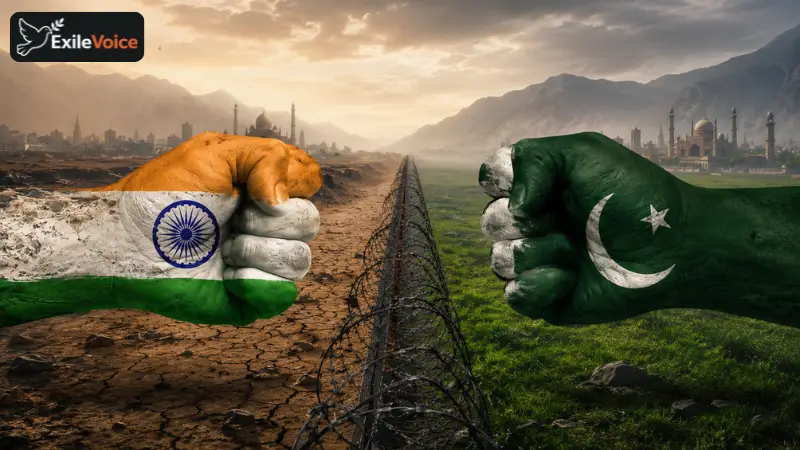
Seventy-nine years following partition, the complex dynamic between India and Pakistan remains defined by deep-seated institutional narratives, historical trauma, and a persistent mutual fixation. Recent polling data from the Pew Research Center highlights how majority populations on both sides view each other through a lens of profound distrust. Over half of surveyed citizens in India identify Pakistan as their primary regional adversary, while an overwhelming majority of Pakistanis express highly unfavorable views of India. This mutual alienation is continuously reinforced by decades of nationalist rhetoric, restricted cross-border communication, and media-driven stereotypes that prevent a nuanced understanding of ordinary societies.
The roots of this estrangement extend deep into the historical events surrounding 1947, subsequent military conflicts, and stark economic divergences. While India has experienced substantial economic expansion and technological development, Pakistan has grappled with continuous governance challenges, political instability, and economic contraction. This growing asymmetry has fostered perceptions of superiority on one side and defensive insularism on the other. Furthermore, the modern digital age, instead of fostering mutual dialogue through cross-border connectivity, has often amplified polarization as state-level narratives and digital platforms censor or restrict alternative perspectives.
Beyond bilateral tensions, regional diplomacy adds another layer of complexity. Historical alignments and strategic shifts, such as changing dynamics involving Afghanistan and regional non-state actors, demonstrate that geopolitical interests supersede ideological or religious solidarity. Observers note that enduring peace requires dismantling entrenched propaganda models and moving past zero-sum strategic frameworks. Until both nations confront the structural impediments to normal diplomatic and cultural engagement, the bilateral relationship will remain constrained by historical grievances and missed opportunities for regional integration.