
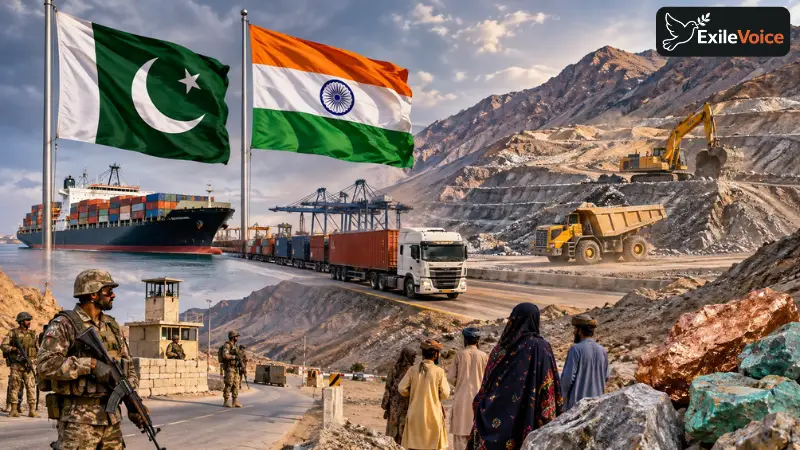
Recent developments across Pakistan highlight a complex interplay between shifting geopolitical rhetoric, cross-border commercial realities, and regional resource management. Official discourse frequently emphasizes security challenges and regional rivalry, yet empirical trade data reveals sustained economic engagement between Pakistan and India. According to international monitoring reports, bilateral trade continues through various channels, with significant imports of essential commodities and industrial materials recorded over recent quarters, alongside high-level diplomatic and ministerial dialogues addressing regional energy and economic cooperation.
Simultaneously, the economic and security landscape in Balochistan continues to experience significant volatility. Recent administrative actions and resource allocation decisions regarding mineral exploration contracts have drawn intense scrutiny from regional stakeholders and political observers. Balochistan remains a focal point for mineral resource development, with numerous exploration licenses issued for mineral-rich districts such as Chagai and Khuzdar. However, local representatives and regional leaders frequently voice concerns regarding transparency, public representation, and the equitable distribution of economic benefits arising from large-scale extraction projects.
Compounding these economic and administrative pressures is the shifting security dynamic in several districts, where local governance structures and checkpoints have faced disruptions. Observers note that administrative transitions and security realignments have created governance vacuums in parts of Balochistan, impacting civil administration and local populations. As federal and provincial authorities navigate these multifaceted challenges, balancing resource extraction, security demands, and public accountability remains a critical test for governance stability in the region.