
The intersection of military involvement in commercial real estate development and environmental degradation has emerged as a critical socio-political issue in Pakistan. Recent investigative reports, highlighted by prominent journalistic platforms and environmental analysts, have cast a sharp focus on large-scale urban development projects spearheaded by defense housing authorities and related entities. These projects, spanning multiple major urban and suburban centers, have raised profound questions regarding regulatory oversight, ecological sustainability, and the balance between infrastructural expansion and environmental preservation.
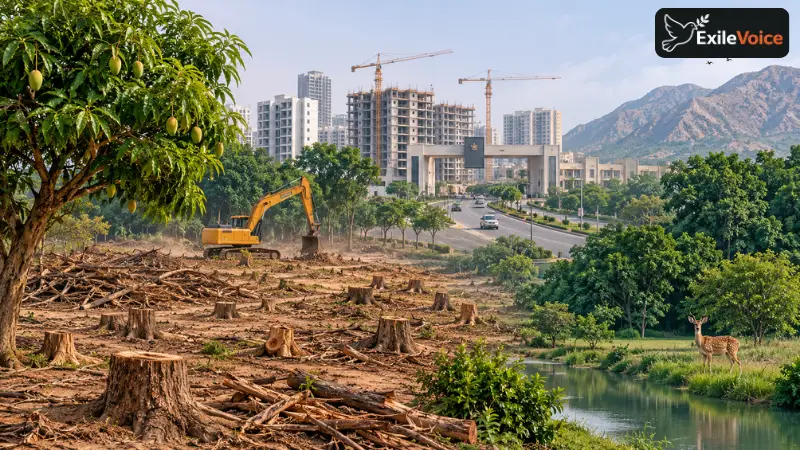
At the heart of this discourse is the extensive clearance of agricultural lands and natural forests to make way for high-end residential and commercial estates. One of the most prominent examples involves expansive real estate developments in Punjab, where thousands of mature fruit-bearing trees, particularly mango orchards that form a cornerstone of the region's agricultural heritage, have been systematically removed. Environmentalists and local landowners argue that these actions not only erode the country's agrarian identity and export capacity but also contribute to microclimatic changes, reduced biodiversity, and the loss of vital green belts.
Furthermore, similar ecological pressures have been documented in the federal capital region and surrounding protected areas. Reports detail the construction of access roads, commercial hubs, and housing enclaves that encroach upon national parks, institutional research lands, and watershed zones. The conversion of these ecological buffers into concrete structures undermines decades of urban planning frameworks designed to protect air quality and wildlife habitats. Legal challenges and judicial reviews have frequently scrutinized these land allocations, revealing systemic vulnerabilities in how state-owned and protected lands are transferred or repurposed for commercial ventures without adequate environmental impact assessments.
The economic and social ramifications of these real estate expansions extend beyond ecological loss. Local communities, small-scale farmers, and generational landowners often find themselves displaced or subjected to immense pressure to relinquish ancestral properties. While proponents of defense-led housing societies argue that such developments stimulate the economy, modernize urban infrastructure, and provide secure housing options, critics contend that the lack of transparent bidding processes and regulatory exemptions creates an uneven playing field. This dynamic reinforces structural inequalities and diminishes public trust in civic and institutional governance.
Addressing these complex challenges requires a fundamental reassessment of land-use policies in Pakistan. Strengthening the enforcement of environmental protection laws, ensuring rigorous judicial independence, and prioritizing sustainable urban planning are essential steps toward safeguarding the nation's ecological future. Moving forward, policymakers, urban planners, and civil society stakeholders must collaborate to establish transparent guidelines that balance development needs with the preservation of natural resources and agricultural heritage.