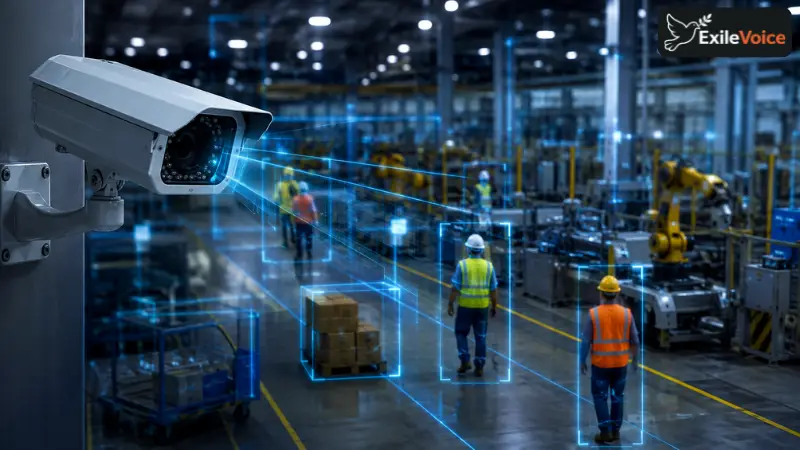
The application of Video Content Analysis (VCA) has transcended marketing, becoming a cornerstone of industrial safety and operational management. By leveraging AI and deep learning, organizations are shifting from reactive surveillance, where humans watch hours of footage, to proactive, automated monitoring. This transformation allows for real-time detection of specific events, from safety protocol breaches to unusual crowd movements.
Modern VCA systems function by integrating with existing CCTV infrastructure. A "visual processing box" or cloud-based AI layer acts as an intelligent observer, applying predefined conditional logic to video streams. For example, in a manufacturing setting, the system can be configured to flag employees entering restricted zones without proper personal protective equipment (PPE). The AI provides real-time alerts to safety managers, drastically reducing the latency between a risk event and a corrective action.
Beyond safety, operational efficiency is a primary driver for VCA adoption. By tracking motion and object patterns, retailers can identify congestion points in stores, allowing for optimized floor layouts that improve the customer experience. Similarly, logistics firms utilize VCA for automated license plate recognition and vehicle flow analysis to streamline shipping yard operations.
The move toward automated analysis also solves the issue of human error and scalability. Human observers inevitably experience fatigue, but AI systems provide 24/7 consistency. Furthermore, the data generated by these systems provides a longitudinal view of safety culture. By aggregating thousands of hours of footage, management can identify trends, such as recurring unsafe behaviors at specific times of the day, allowing for targeted training and process improvement. As AI models become more sophisticated, the ability to interpret sentiment and complex human behavior will further solidify VCA as an essential utility for modern enterprise management.