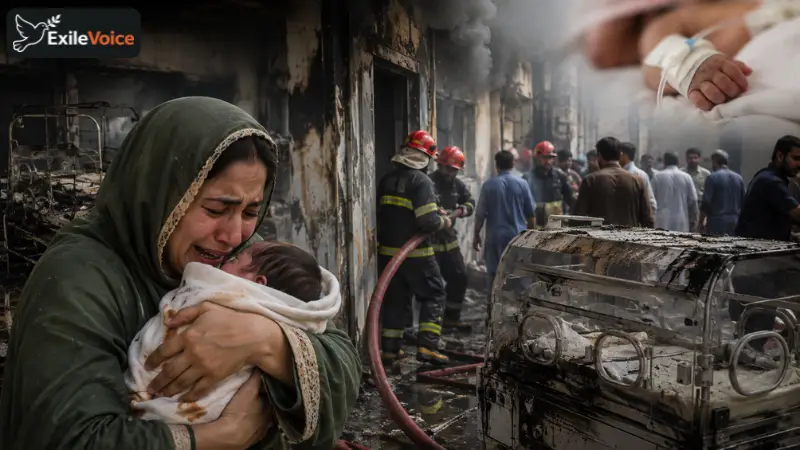
The recent devastating fire incident at the Pakistan Institute of Medical Sciences (PIMS) nursery ward in Islamabad has sent shockwaves across the nation, resulting in the tragic deaths of fourteen newborn children. Initial official reports and investigative findings indicate a catastrophic convergence of technical malfunctions and administrative negligence. According to preliminary fire department logs, emergency responders received the fire alarm early in the morning, yet rescue operations were severely hampered by locked emergency exits, a complete absence of working fire safety equipment, and uncoordinated security protocols. Witnesses and grieving parents reported that primary exit doors were securely locked from the outside, forcing desperate individuals to break structural walls to rescue trapped infants.
Compounding the grief, conflicting accounts emerged from government officials and hospital administration regarding the exact cause of the disaster. While initial ministerial briefings pointed toward an electrical short circuit originating from air conditioning units, subsequent hospital evaluations suggested that an oxygen monitoring device attached to an incubator malfunctioned, accelerating combustion. Furthermore, testimonies from bereaved families highlight an alarming absence of medical staff, nurses, and supervisory personnel during the critical initial phases of the emergency. Security personnel at the facility reportedly impeded early firefighter access, exacerbating delays in containment and rescue operations.
This tragic event is not an isolated occurrence within Pakistan's public healthcare infrastructure. Similar fatal incidents have been documented in recent years, including tragedies at district headquarters hospitals in Pakpattan and Sahiwal, where severe overcrowding and electrical failures claimed numerous young lives. Critics argue that these recurring disasters expose deep-seated structural rot, chronic under-investment in basic safety protocols, and a culture of impunity among administrative authorities. Meaningful reform requires independent judicial inquiries, strict enforcement of international fire safety standards, and uncompromising accountability for administrative negligence to prevent future catastrophes.