
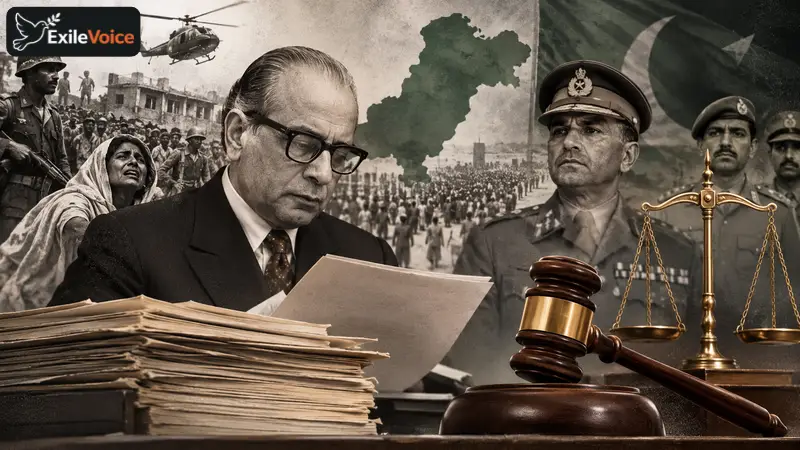
Historical documentation regarding post-1971 military and administrative accountability in Pakistan continues to offer critical insights into institutional governance and legal precedent. Archival reviews of the Hamoodur Rahman Commission report, which investigated the events of 1971 in East Pakistan, detail extensive allegations against various military and civilian officials, ranging from professional negligence to commercial improprieties.
Despite explicit recommendations by the judicial commission for formal court-martial proceedings and public inquiries against dozens of senior officers and officials, subsequent actions primarily involved administrative retirements or demotions rather than formal judicial trials. Legal historians and commentators frequently contrast the handling of historical high-level military inquiries with contemporary legal frameworks, noting how delayed disclosures of investigative findings shape public perception of institutional accountability, military law, and the supremacy of civilian oversight.