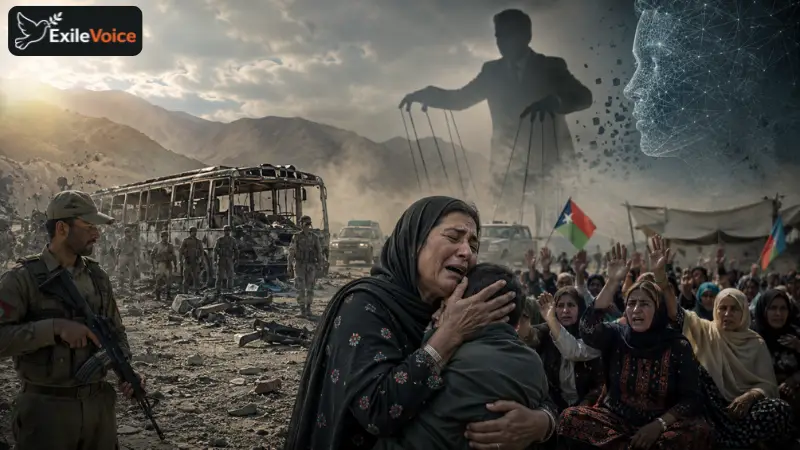
The security landscape in Balochistan has reached a critical juncture, marked by a series of lethal attacks that have raised profound questions about the stability of the region and the efficacy of current state policies. Recent reports indicate a dramatic surge in violence, specifically in the Mastung area, where targeted strikes against security personnel have resulted in significant casualties. These incidents, occurring in rapid succession, suggest that the security apparatus is struggling to contain an insurgency that is increasingly challenging the state's writ.
The current situation is compounded by a disconnect between the official government narrative and the ground reality faced by residents and security forces alike. While government communications often emphasize the success of initiatives like "Operation Shaban" and portray them as critical for regional stability, the frequency and intensity of attacks against public transport and security installations paint a starkly different picture. The persistence of these attacks, even after repeated operations, indicates that systemic issues, rather than isolated security lapses, are at play.
Furthermore, a concerning development has emerged regarding the information dissemination strategy. Reports have surfaced alleging that visual evidence, particularly videos meant to highlight the effectiveness of security operations against insurgents, may have been generated using Artificial Intelligence (AI) and subsequently circulated to manipulate public perception. If these allegations hold merit, it represents a significant breach of trust between the state and the citizenry. Using manufactured content to project a narrative of control while legitimate crises continue to unfold undermines the credibility of the institutions responsible for national security.
The humanitarian cost of this ongoing conflict is staggering. Families of the victims, particularly those of fallen security personnel, have been forced into prolonged protests, awaiting acknowledgment and engagement from state authorities. The failure to address these grievances, or to even provide a consistent and transparent account of events, has deepened the sense of alienation among the populace. For any long-term resolution to be achieved, the focus must shift beyond purely military interventions toward a comprehensive approach that includes meaningful political engagement, economic development, and the restoration of authentic, transparent communication with the people of Balochistan. Without these structural changes, the region risks remaining in a state of perpetual instability.