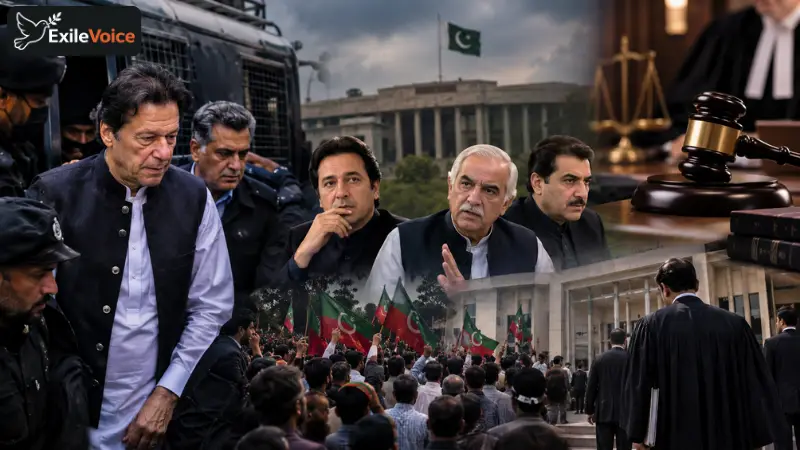
In the complex landscape of Pakistani politics, the communication strategies employed by party leadership and institutional actors have come under intense scrutiny. A primary area of contention is how information regarding high-profile prisoners, such as Imran Khan, is disseminated to the public. There is a perceptible friction between the formal statements made by party representatives and the lived reality of the individuals they represent. When official statements suggest that a leader is in perfect health while medical evidence and family testimony suggest the opposite, it creates a crisis of credibility that can erode the trust of the political base.
This issue is further complicated by the optics of political interaction. The recent documentation of high-level meetings at the residence of Pakistan Tehreek-e-Insaf (PTI) leadership, specifically during a period of mourning, has invited criticism. Observers argue that the transformation of personal condolences into a "live commentary" on social media undermines the gravity of the political struggle and confuses supporters. When leaders are seen engaging cordially with individuals whom their own political movement identifies as institutional adversaries, it sends conflicting signals to a base that is often mobilized around anti-establishment sentiment.
Effective political communication requires consistency and clarity. When a party's narrative is perceived as being dictated or influenced by those who are viewed as political opponents, it diminishes the movement's agency. Professional insights suggest that for such movements to maintain their influence, they must navigate the tension between necessary engagement and the preservation of their core identity. The public demand for transparency is higher than ever, and parties that fail to reconcile their public messaging with the realities facing their leadership risk alienating their most loyal supporters. The path forward for these political entities will likely involve a complete reassessment of how they communicate, who they trust with their public image, and how they define their relationship with both the public and institutional power structures.