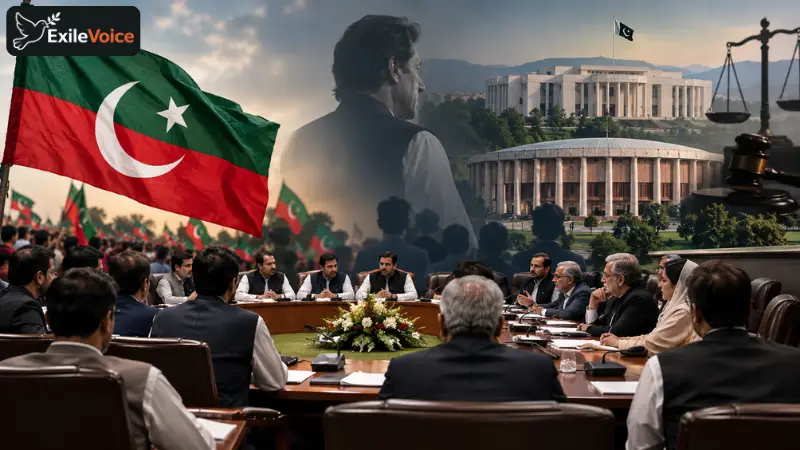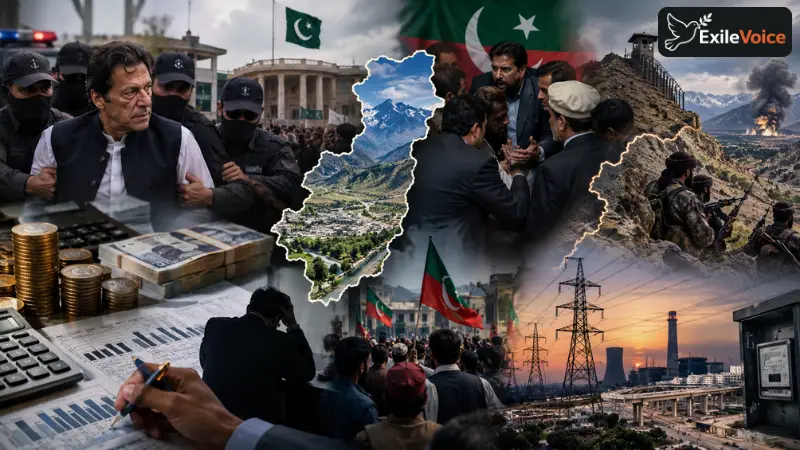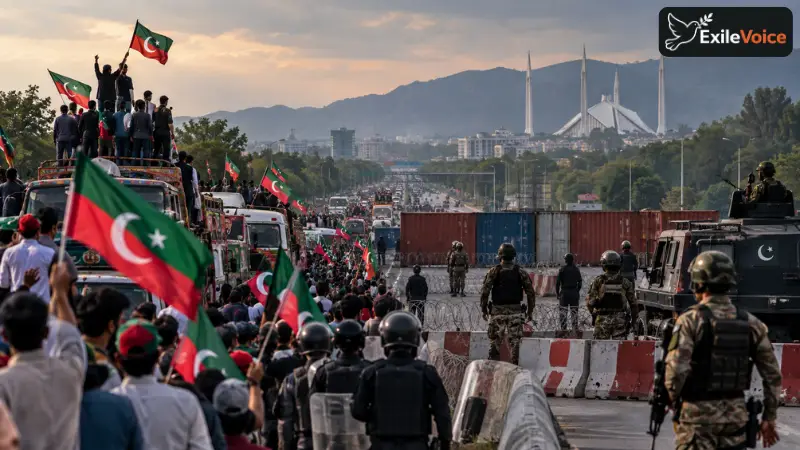
The political landscape in Pakistan has reached a critical turning point as political movements, led by Pakistan Tehreek-e-Insaf, rapidly gain momentum across multiple provinces. The opposition movement has accelerated its strategy, mobilizing large political convoys from Khyber Pakhtunkhwa toward the federal capital, Islamabad. This shift in operational tempo underscores the escalating friction between the ruling coalition and opposition forces seeking immediate political concessions, early electoral commitments, and policy reform. The strategy centers on sustained public pressure, organizing large-scale rallies and strategic blockades designed to test the administrative resilience of the central government.
As political convoys move through key transport corridors, state authorities have responded with extensive security containment operations. Federal and provincial law enforcement agencies have deployed anti-riot forces, installed heavy transport shipping containers along major highway arteries, and suspended public movement across strategic entry points into Islamabad and Rawalpindi. The deployment of security infrastructure highlights the deep institutional apprehension regarding potential civil disruption and economic paralysis. Transportation hubs and commercial centers have experienced significant disruptions, severely affecting local supply chains and daily commuters across central Punjab and the federal territory.
Despite heavy security measures, opposition leadership continues to push forward, utilizing decentralized organization tactics to bypass primary security checkpoints. Political analysts emphasize that the movement strategy relies on creating multiple pressure points simultaneously across major urban centers, forcing law enforcement resources to stretch thin. Local political networks, grassroots organizers, and student movements have been integrated into the logistics framework to maintain long-term sustainability on the streets. The political rhetoric surrounding the mobilization has intensified, with organizers asserting that the public movement will not dissipate without structural administrative adjustments and clear timelines regarding political demands.
The economic and political ramifications of these prolonged confrontations extend far beyond immediate political posturing. Continued road closures, digital communication throttling, and trade slowdowns contribute to mounting economic volatility at a time when macro-economic stability remains fragile. International observers and policy analysts caution that prolonged political instability weakens governance structures, deterring foreign direct investment and delaying vital policy implementation. The current impasse requires strategic political dialogue between opposing leadership factions to prevent further escalation, protect public infrastructure, and restore stability within the country.