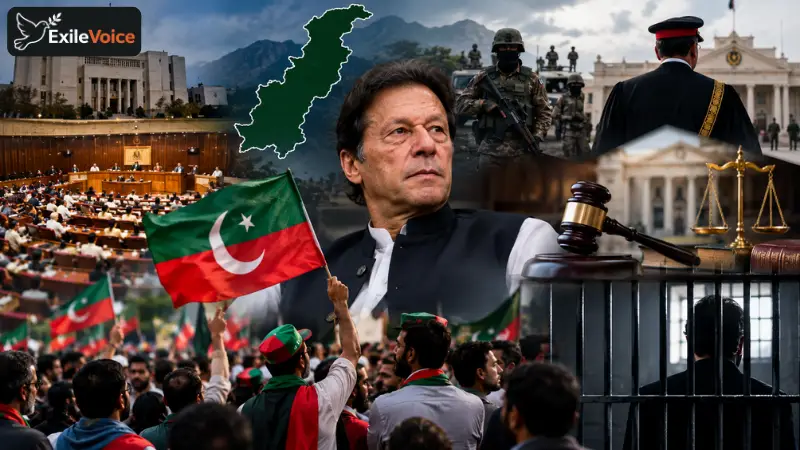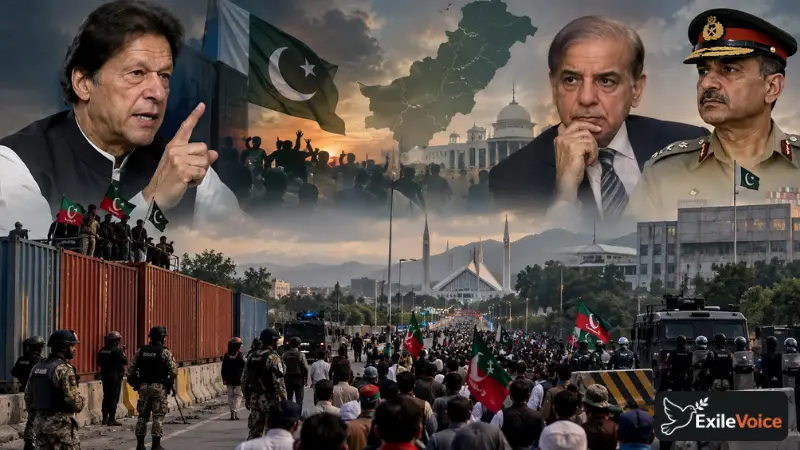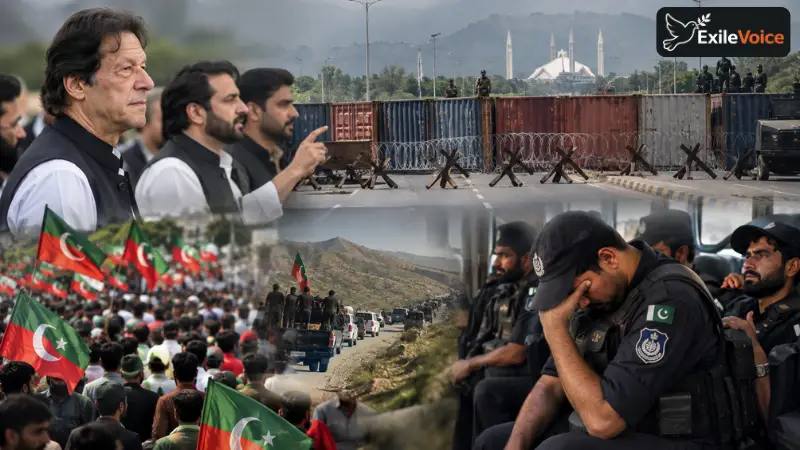
Pakistan's political landscape faces intense volatility as Pakistan Tehreek-e-Insaf (PTI) considers rescheduling its scheduled Long March towards Islamabad. Initially planned for September 27, strategic discussions within the party's leadership, including crucial meetings held by the Khyber Pakhtunkhwa parliamentary leadership in Peshawar, indicate a potential postponement to early October. This strategic calibration comes in direct response to the massive, multi-tiered security blockades erected across the entry points of the federal capital, where shipping containers have been welded together and reinforced with heavy iron spikes to halt any vehicular or foot progress.
While state authorities reinforce physical barriers along major highways and inter-provincial bridges connecting Khyber Pakhtunkhwa and Punjab, significant political friction continues to brew beneath the surface. PTI leaders from regions as far as Balochistan, under local leadership like Daud Shah, have managed to maneuver through unconventional, bypass routes to join main contingents in Khyber Pakhtunkhwa, demonstrating the logistical persistence of the opposition movements. However, government countermeasures remain firm, including administrative shutdowns such as early closures of the Civil Secretariat in Peshawar citing security threats, alongside persistent media censorship efforts aimed at suppressing political party branding across national broadcasts.
Concurrently, a critical human element has emerged within the rank-and-file of the law enforcement personnel deployed to contain the demonstrations. Lower-ranking officers from the Punjab Police, transferred in large numbers to secure federal barricades, are voicing widespread dissatisfaction regarding their living conditions and operational mandates. Transcripts and videos emerging from police transit buses reveal personnel expressing open political sympathy for opposition figures while expressing dismay over sub-standard meal allocations, inadequate resting facilities, and poor logistics.
Sociological analysts note that the friction between frontline police constables and civil protesters often stems from shared socio-economic backgrounds. Constables and political demonstrators frequently originate from similar lower-middle-class environments, making the physical confrontations a manifestation of broader systemic economic pressures rather than purely ideological conflicts. As political strategy meetings determine the exact timeline for the march on Islamabad, the underlying morale and operational readiness of deployed security forces remain a pivotal variable in the state's containment architecture.