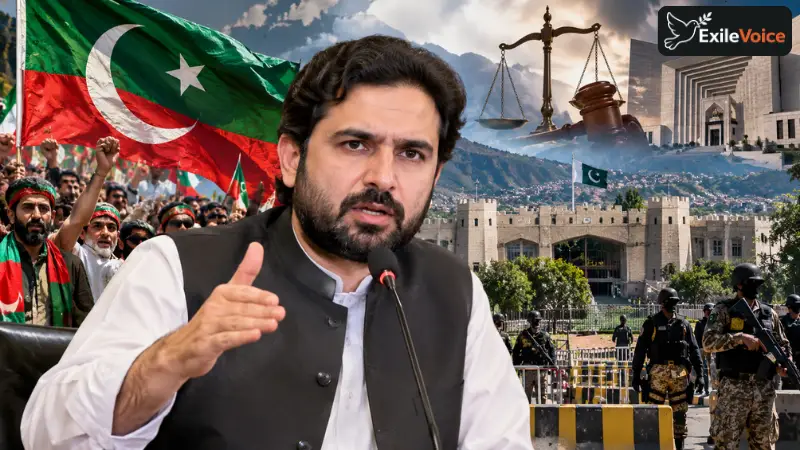
The political trajectory of Pakistan Tehreek-e-Insaf (PTI) in Khyber Pakhtunkhwa (KP) is undergoing a deliberate tactical recalibration under Chief Minister Sohail Afridi. Amid heightened political tensions with the federal establishment and ongoing legal challenges surrounding party leadership, the provincial leadership has adopted a dual-track strategy combining institutional assertion with calculated mass mobilization. This shift reflects a broader evolution in how regional administration interacts with federal institutions and judicial mandates.
Chief Minister Sohail Afridi’s political strategy, often referred to in political circles as his "net practice," signifies a transition from short-term confrontational tactics to a sustained, long-term operational framework. Rather than relying solely on immediate sit-ins or brief demonstrations, the current political posture emphasizes incremental pressure, institutional endurance, and structured street power. This approach acknowledges the heightened security posture in Islamabad while maintaining a continuous threat of political pressure to negotiate leverage.
A central element of this evolving dynamic is the legal and administrative friction between provincial leaders and anti-terrorism courts. The issuance and re-issuance of legal warrants against key provincial figures have underscored the institutional divide between Islamabad and Peshawar. The state apparatus has increasingly utilized legal charge sheets and judicial processes in response to past protests, while PTI leadership framing these actions as politically motivated attempts to handicap provincial governance and pressure party decision-making.
Furthermore, the relationship between the Khyber Pakhtunkhwa provincial executive and security authorities remains complex. Recent statements from defense authorities and military spokespersons have highlighted operational divergences regarding counter-terrorism priorities, border management, and provincial policy toward regional militant threats. The federal administration has characterized provincial hesitation as political indifference, whereas KP authorities maintain that local governance must prioritize provincial autonomy, civil rights, and political reconciliation.
As political negotiations fluctuate between deadlocks and behind-the-scenes contacts, Khyber Pakhtunkhwa remains the primary operational hub for opposition resistance. How Chief Minister Sohail Afridi balances administrative responsibility, federal legal challenges, and street mobilization will significantly determine the future power dynamic between the federal center and regional governments in Pakistan.