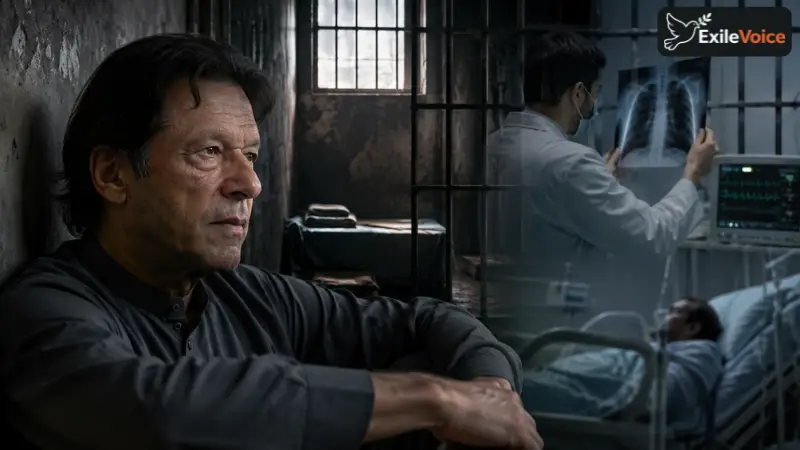
The recent medical report concerning former Prime Minister Imran Khan, submitted to the Supreme Court of Pakistan by the Superintendent of Adiala Jail, has sparked significant national concern. Based on assessments by a medical board from PIMS hospital, the reports paint a disturbing picture of the former leader's health and the conditions of his confinement. According to the analysis, Khan’s anxiety levels are classified at an extreme "plus-plus-plus" level, highlighting the severe mental and psychological toll of his prolonged isolation.
Professional medical insights suggest that the absence of adequate physical activity and sensory deprivation, characterized by a lack of access to books, television, and basic news, have compounded his existing health struggles. There is particular alarm surrounding his cardiac health, with some medical experts suggesting signs of left ventricular dysfunction, a condition that necessitates immediate professional medical intervention in a fully equipped hospital setting. The medication prescribed, which reportedly includes sedatives administered multiple times a day, has raised questions among those familiar with his previous lifestyle and health history, as Khan was never known to have chronic issues with blood pressure or heart health.
Furthermore, the contradictions between official statements and the reality presented in the medical documentation have added a layer of complexity to the narrative. While some political figures have publicly asserted that Khan is in good health, the medical report indicates otherwise. This discrepancy has fueled accusations of a deliberate strategy to downplay the urgency of his situation. Legal and human rights advocates argue that regardless of the political climate, the state’s duty to provide adequate medical care to prisoners is paramount, and the failure to do so, especially when there are documented cardiac concerns, constitutes a serious violation of fundamental rights. The upcoming proceedings in the Supreme Court are expected to be a pivotal moment in determining whether Khan will be granted the medical access he requires, as public pressure continues to mount for his transfer to a hospital where he can receive specialized care.