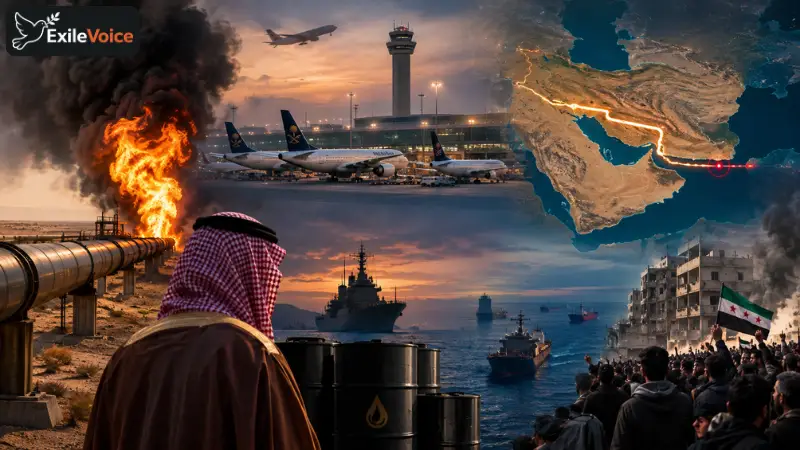
Recent developments in the Middle East have highlighted growing regional instabilities, marked by critical disruptions to vital infrastructure. Reports indicate that flight operations at major Saudi Arabian hubs, including Dammam, Riyadh, and Jeddah, experienced temporary suspensions following attacks on the strategic East-West pipeline. This pipeline serves as a crucial alternate route for petroleum transport, designed to bypass the Strait of Hormuz.
The security situation has drawn international concern as global oil markets react to supply vulnerabilities. With geopolitical friction involving regional actors and maritime choke points like the Bab-el-Mandeb strait, energy security remains a pressing issue. Analysts note that historical territorial claims and ongoing conflicts involving regional groups continue to threaten stability across the Arabian Peninsula. Furthermore, civil unrest in neighboring nations, such as protests over commodity prices in Syria, adds to the volatile socio-political landscape of the region, creating continuous challenges for global economic stability.