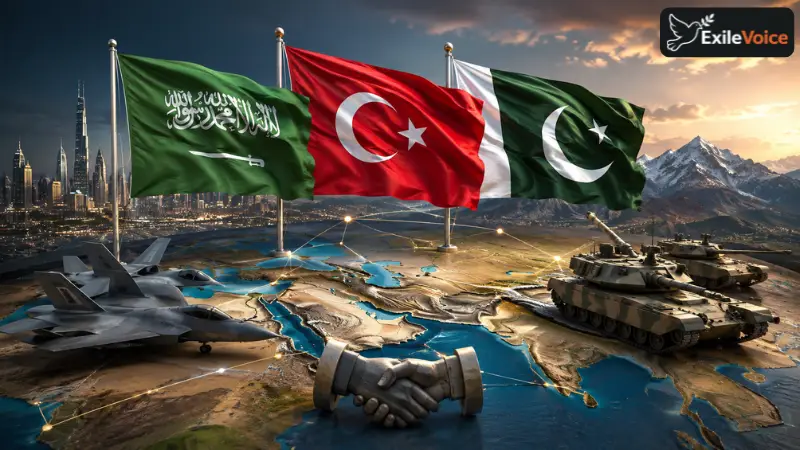
Recent diplomatic and media reports indicate the formation of a significant strategic arrangement involving Saudi Arabia, Turkey, and Pakistan. This trilateral framework is being positioned as a novel security architecture for West Asia, leveraging distinct national capabilities across the participating states. Rather than functioning as a conventional mutual defense alliance, the pact integrates Saudi financial backing, advanced Turkish military technology, and Pakistan's established military expertise and nuclear capabilities.
This development aligns with long-term regional adjustments following shifts in security dynamics involving traditional foreign military presences. Analysts note that while official communications initially framed high-level visits primarily around religious duties or bilateral engagements, international reporting highlights a broader geopolitical alignment. Furthermore, the architecture reflects a coordinated approach to regional stability, balancing multiple security concerns across the Middle East and South Asia without disrupting broader international partnerships.