Massive public demonstrations have swept across major European nations, drawing hundreds of thousands of protesters onto the streets to voice intense frustration over inflation, rising fuel costs, economic inequality, and shifting immigration demographics. In France, the Ministry of Interior reported that over four hundred thousand demonstrators mobilized nationwide, with approximately one hundred and ten thousand rallying in Paris alone. Authorities deployed tens of thousands of law enforcement personnel to manage the crowds, resulting in significant disruptions, infrastructure damage, and the temporary closure of prominent cultural institutions and tourist sites, including major museums. Similar unrest unfolded in Spain, where cities like Barcelona and Madrid experienced high volumes of protesters, featuring a notable percentage of underage participants, alongside clashes and property damage. Italy faced parallel disruptions, particularly in Milan and Rome, where security forces were reinforced to safeguard iconic historical landmarks and commercial districts. Observers note that these widespread demonstrations reflect deep-seated socioeconomic strains, intersecting cost-of-living crises, and broader long-term demographic challenges facing modern European societies.
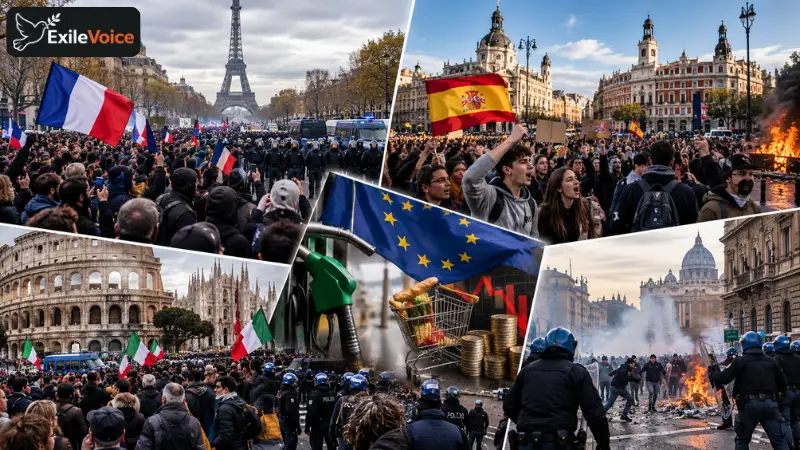
Europe-Wide Protests Erupt Over Economic Pressures and Governance
AI Quick Read
- Protests erupted across multiple European countries, driven by high inflation, fuel costs, and socioeconomic grievances.
- France recorded over four hundred thousand demonstrators nationwide, leading to heightened security and the closure of key cultural sites.
- Spain and Italy experienced significant public unrest, property damage, and heightened security deployments around commercial and historical zones.