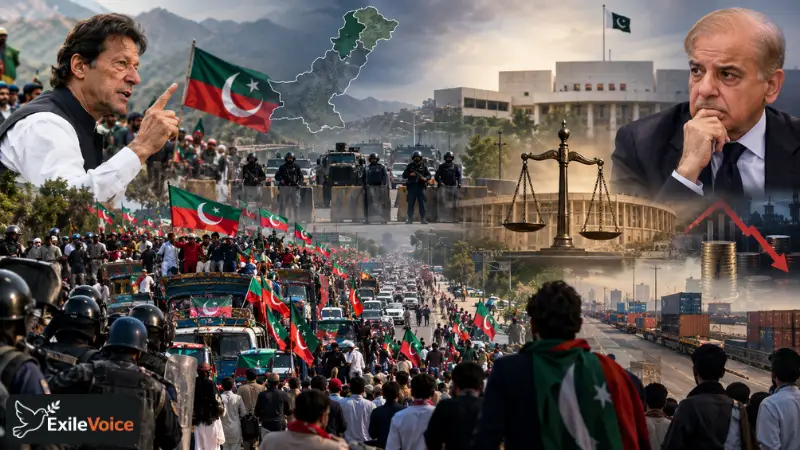
The third day of the Pakistan Tehreek-e-Insaf (PTI) political movement marked a significant escalation in the ongoing civil friction between Pakistan's political opposition and the federal government. Mobilized across key political strongholds, massive political convoys heading toward Islamabad have disrupted major trade routes and urban centers, exposing deep structural vulnerabilities in the country's governance framework. The persistent protest movement, catalyzed by demands for constitutional restoration, judicial independence, and the release of political leaders, has pushed federal and provincial authorities into a complex security and political posture.
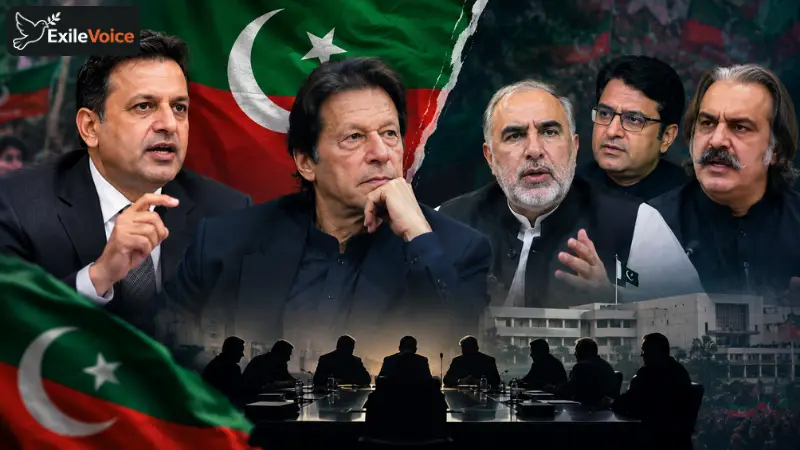
A primary driver of this mobilization has been the political coordination emerging from Khyber Pakhtunkhwa, where provincial leadership has openly challenged federal administrative directives. By utilizing provincial resources and political organization, opposition leaders have successfully sustained public momentum across multiple geographic zones despite heavy police presence, road barricades, and internet disruptions. This institutional friction between provincial executive leadership and the federal cabinet underscores a growing constitutional divide, where regional administrations directly contest central authority on issues of state security and fundamental political rights.
The ruling government, led by Prime Minister Shehbaz Sharif and supported by coalition partners, faces a double challenge: maintaining public order while managing a fragile national economy constrained by international debt obligations and inflation. The strategy of deploying law enforcement blockades and imposing section restrictions has drawn sharp criticism from civil society organizations and human rights groups, who argue that state security measures disproportionately restrict freedom of assembly and freedom of expression. Conversely, government representatives argue that unannounced mass marches threaten public safety, economic stability, and civic infrastructure in key metropolitan centers.
The political disruption comes at a critical time when economic stability requires uninterrupted trade corridors and investor confidence. Prolonged transport blockades and urban shut-downs impact supply chains, small businesses, and daily daily labor across major economic hubs. Financial analysts warn that continued political volatility risks undermining recent fiscal recovery efforts and negotiations with global financial institutions. The economic cost of political confrontation has thus become a central argument used by both government loyalists and opposition strategists, with each side attributing fiscal stagnation to the other's political actions.
Additionally, the political stalemate highlights the shrinking space for formal legislative dialogue in Pakistan’s parliamentary institutions. With political disputes increasingly settled on public streets rather than floor debates in the National Assembly, institutional mechanisms for conflict resolution are under strain. Prime Minister Shehbaz Sharif's repeated offers of unconditional talks have been largely dismissed by opposition figures who view such proposals as political stalling tactics lacking concrete commitments on key demands, such as elections and political detentions.
As the long march continues into its subsequent phases, the outcome will likely depend on the endurance of protesting public groups, the unity of opposition coalitions, and the strategic decisions made by state institutions regarding law enforcement and mediation. The ongoing events serve as a critical case study in how civil agitation, state governance, and institutional power dynamics interact during periods of profound political instability in developing democracies.