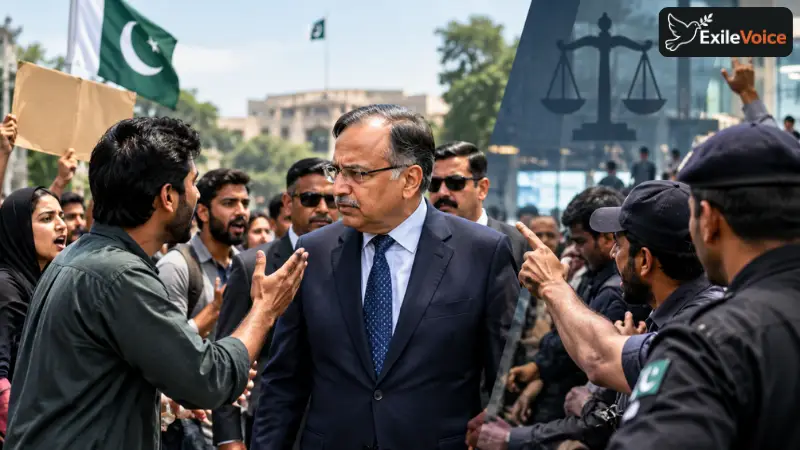
The distinction between democratic dissent and political harassment has become one of the most hotly contested debates in modern political science. In hyper-polarized political environments, the boundaries governing how citizens interact with public officials in non-official settings have shifted dramatically. Events in Pakistan, characterized by public confrontations between citizens and prominent politicians like Ahsan Iqbal, provide a compelling case study on the changing dynamics of civic expression and public accountability.
From one perspective, public officials hold a duty of accountability that extends beyond parliament into the public domain. Supporters of active public engagement argue that citizens, particularly those struggling under the weight of economic inflation and political instability, have a legitimate right to verbally challenge politicians when they encounter them in public spaces. In this framework, peaceful verbal confrontation is seen as a direct form of democratic feedback, bypassing official media filters and traditional political PR.
Conversely, government representatives and legal scholars frequently express concern over the normalization of public heckling. When public figures are confronted in restaurants, airports, or shopping areas, questions arise regarding personal privacy, public order, and the potential escalation into physical harassment or mob behavior. Ruling party representatives argue that while disagreement is integral to democracy, targeted harassment threatens the fabric of civil society and risks normalizing hostility as a political tool.
The debate further expands into how state machinery responds to such incidents. Opposition commentators argue that using state authority to pressure, identify, or demand apologies from citizens who engage in verbal protest creates a chilling effect on free speech. When government machinery is perceived as intervening to protect politicians from public criticism, it often amplifies public backlash rather than suppressing it.
Ultimately, navigating the fine line between protected free speech and unacceptable political harassment requires a commitment from both political leadership and the public. Political leaders must demonstrate resilience and openness to critique, while political parties must refrain from fostering environments where disagreement turns into personal animosity. Establishing clear boundaries for civil discourse remains essential for sustaining democratic stability.