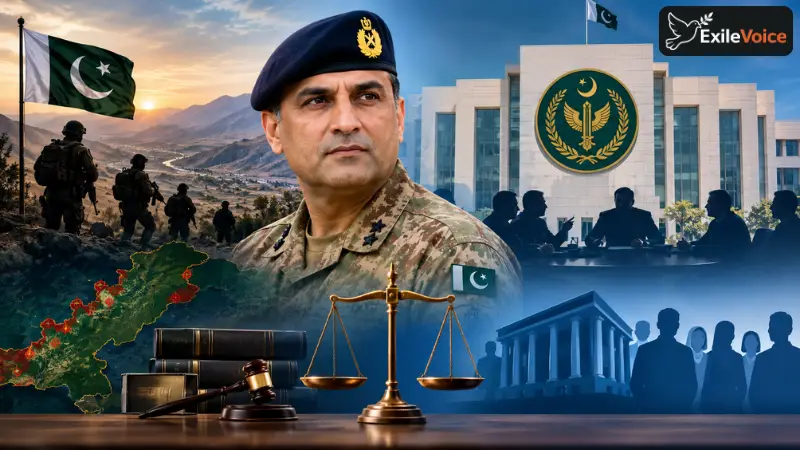
The recent notification regarding the appointment of Major General Faisal Naseer as the National Coordinator of the National Counter Terrorism Authority (NACTA) has generated substantial political and legal debate across Pakistan. Issued under Section 9(1) of the NACTA Act of 2013, the appointment places a senior military intelligence figure at the helm of the country's central civilian-led counter-terrorism coordination body. Critics and legal analysts have raised questions regarding the administrative framework of seconding military personnel to civilian security positions, examining whether such transitions align strictly with institutional mandates or if they blur the lines between civilian administration and military oversight.
From a strategic perspective, the appointment occurs at a critical juncture for national security. Pakistan continues to face significant security challenges, particularly concerning militant networks operating along the borders of Khyber Pakhtunkhwa and Balochistan. Proponents of the decision argue that integrating an officer with extensive experience in counter-intelligence from the Inter-Services Intelligence (ISI) into NACTA can streamline intelligence-sharing and enhance inter-agency coordination. Because NACTA is mandated to formulate national strategies, coordinate federal and provincial counter-terrorism frameworks, and implement counter-extremism policies, proponents assert that robust operational experience is essential to tackle modern security threats effectively.
However, the debate extends beyond operational utility into the realms of institutional governance and public perception. Political commentators and opposition figures frequently scrutinize such high-profile administrative placements, questioning the transparency of secondment terms and the broader implications for civilian bureaucratic authority. The core tension lies in balancing the immediate necessity for aggressive, intelligence-led counter-terrorism operations against the long-term objective of strengthening civilian institutions. As NACTA assumes a central role in unifying the nation's response to escalating militancy, the success of this appointment will ultimately be judged by its ability to foster genuine synergy among diverse law enforcement bodies while respecting constitutional and statutory boundaries.