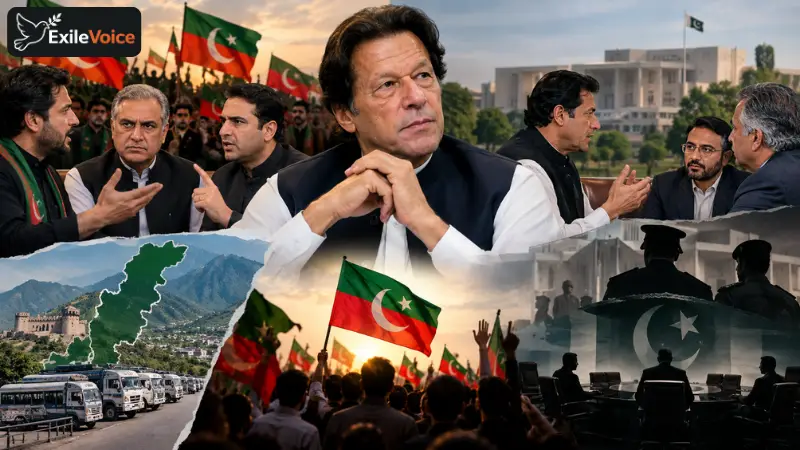
The political landscape of Pakistan continues to experience intense volatility, marked by structural shifts, cabinet reshuffles, and administrative reallocations. Recent political discourse highlights ongoing adjustments at the highest levels of governance, focusing heavily on key figures such as Ishaq Dar and Mohsin Naqvi. These shifts signal deeper institutional repositioning amid economic challenges and mounting pressure from opposition factions.
Observers note that changes within federal portfolios and administrative alignments reflect the ruling coalition's struggle to maintain stability. Financial governance, traditionally overseen by veteran figures like Ishaq Dar, remains a focal point of public critique and internal friction. Concurrently, the increasing administrative visibility of figures such as Mohsin Naqvi underscores a reliance on security and crisis management frameworks to handle mounting political dissent.
Beyond cabinet movements, state interactions with bureaucratic structures and law enforcement agencies have intensified. Recent discussions point toward a stricter approach to administrative discipline, often referred to colloquially as officer net thrashing, where bureaucratic accountability is weaponized or tightly squeezed to align with evolving administrative objectives. This strategy, while intended to project control, often risks deepening systemic paralysis within civil services.
Furthermore, political commentators continue to dissect public communication strategies employed by various political actors, including critique of informal political gatherings and media messaging. The discourse emphasizes that public frustration is reaching new thresholds, driven by persistent inflation, governance deficits, and institutional overreach. As political parties recalibrate their survival tactics, the intersection of judicial oversight, administrative execution, and public resistance will dictate the trajectory of governance in the coming months.