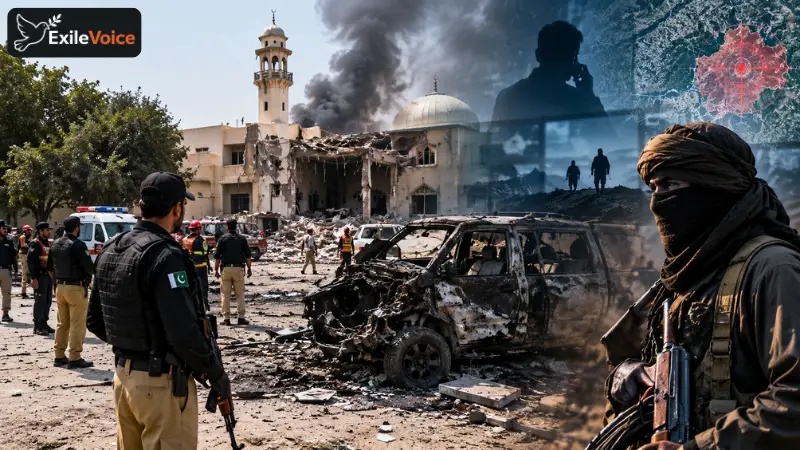
A devastating vehicle-borne suicide bombing targeting the Kohat Police Lines during Friday prayers has resulted in significant casualties, including police officials and civilians. The attack, which caused severe structural damage to the nearby mosque and surrounding government buildings, underscores a sharp decline in internal security and intelligence coordination. Responsibility for the attack was claimed by the Hafiz Gul Bahadur group, a faction historically classified by security analysts under past state strategies as part of the so-called "good Taliban" network operating across the Afghan border.
Security experts note that prior intelligence warnings regarding potential threats in Kohat were available as early as 2025, yet preventative measures were overshadowed by priorities centered on political surveillance and opposition suppression. Critics point out that while security apparatuses diverted substantial resources toward managing political dissent, militant groups capitalized on intelligence gaps.
The incident has triggered widespread public outrage over the security establishment's operational focus. Analysts argue that decades of strategic miscalculations regarding militant factions have backfired significantly, leaving law enforcement personnel and innocent civilians bearing the ultimate cost of institutional misdirection.