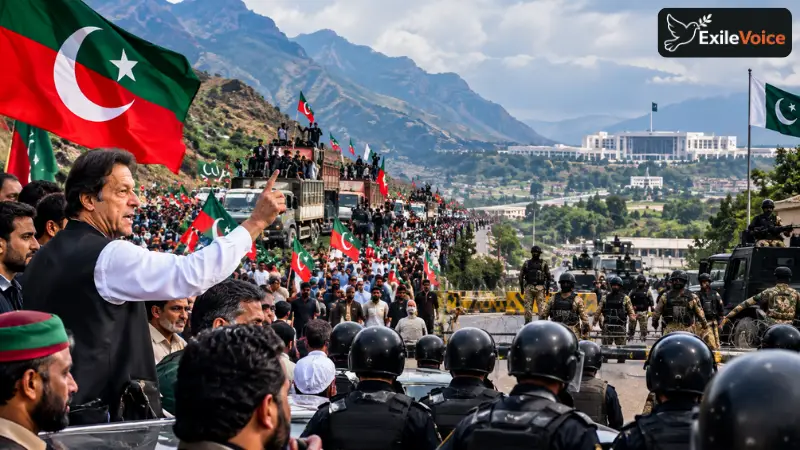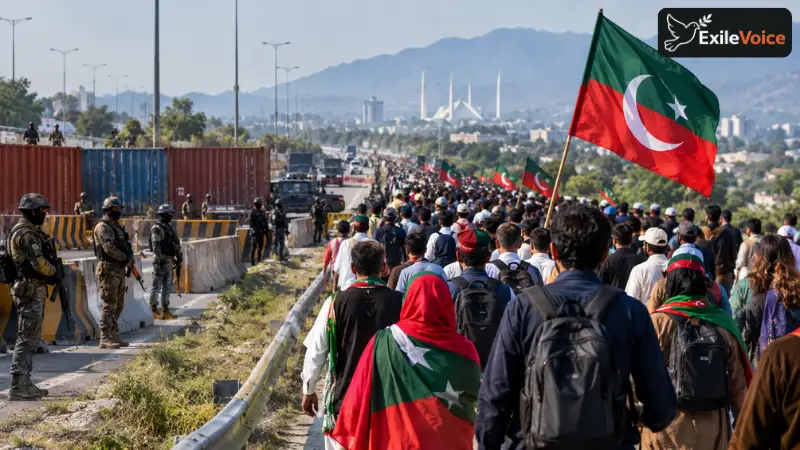
In response to widespread road blockades, shipping container barricades, and security checkpoints placed along major arteries leading to Islamabad, opposition strategists within Pakistan Tehreek-e-Insaf (PTI) have initiated novel protest tactics. Among these tactical adjustments is a proposal by Chief Minister Sohail Afridi and regional leaders to transition vehicular convoys into foot marches to bypass state obstacles.
For decades, political long marches in Pakistan relied heavily on large vehicular processions, motorcades, and containerized sound trucks. However, administrative blockades at key entry points, such as the Grand Trunk Road, motorway interchanges, and provincial border posts like Attock and Dahgal, have increasingly neutralized traditional vehicular rallies. In response, PTI leadership is testing decentralized, pedestrian-based movements that allow marchers to navigate off-road routes, secondary trails, and urban bypasses.
The strategic transition to foot marches poses distinct challenges for law enforcement and security management. While vehicular convoys are relatively easy to contain at bridge chokepoints and highway toll plazas, dispersed pedestrian groups present a far more fluid operational environment. Security forces stationed along federal boundaries face increased logistical complexity when attempting to manage decentralized marchers moving across multiple approach routes simultaneously.
Furthermore, this change in tactical approach reflects an attempt to sustain momentum despite heavy administrative restrictions and preventative detention of party organizers. By combining localized rallies in Khyber Pakhtunkhwa with coordinated foot marches moving through rural corridors into Punjab, party planners seek to maintain continuous pressure on the federal capital without relying exclusively on large vehicular caravans.
However, military and civilian security experts caution that foot marches across long distances carry significant risk of logistical exhaustion, weather impact, and heightened risk of direct confrontations at urban perimeter checkpoints. As federal authorities reinforce security zones around Islamabad's Red Zone and key administrative districts, the effectiveness of pedestrian protest tactics will depend on organizational discipline, participant endurance, and public support along the route.