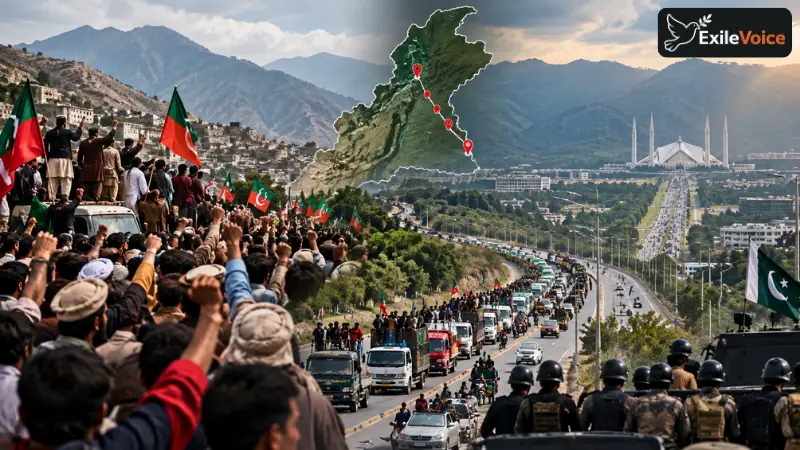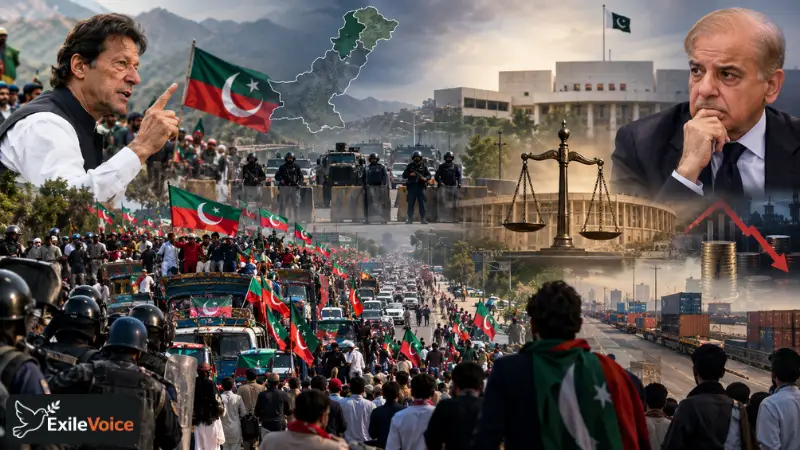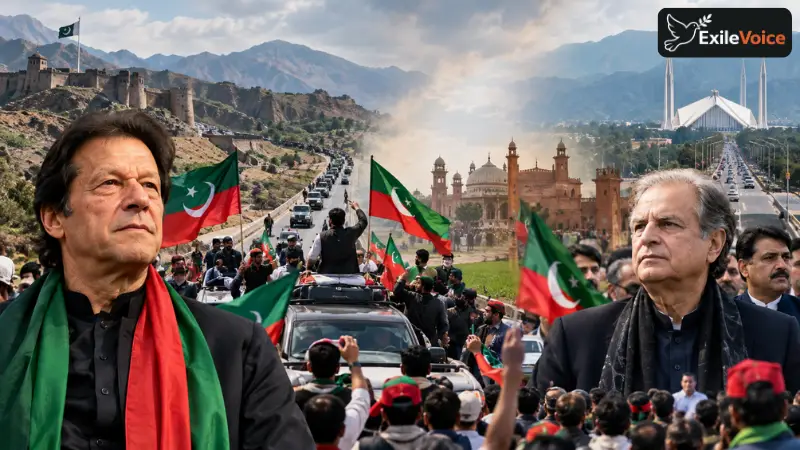
Pakistan’s domestic political landscape continues to experience intense turbulence as opposition factions seek to re-energize public mobilization against the sitting administration. Central to this renewed push is Pakistan Tehreek-e-Insaf (PTI), which has organized long marches originating from Khyber Pakhtunkhwa (KP) and expanding into strategic centers across Punjab. The movement underscores persistent structural friction between political opposition groups and state institutions following the February general elections.
In Punjab, parliamentary opposition within the provincial assembly has faced scrutiny regarding the effectiveness of its protest strategies. Despite holding roughly 100 assembly seats, opposition lawmakers have primarily relied on symbolic floor protests, resolution submissions, and social media messaging. Observers note that parliamentary activity in Lahore has often maintained an overly procedural cadence rather than organizing sustained ground-level mobilization, creating a strategic disconnect between party leadership and grassroots supporters.
A notable turn in regional political dynamics involves senior veteran politician Javed Hashmi, who announced his re-engagement with opposition protest marches from Multan toward Islamabad. Hashmi's participation carries symbolic weight in southern Punjab, where political networking and veteran leadership remain pivotal for rallying public assembly. His alignment with ongoing marches highlights broader political realignments among legacy leaders seeking to challenge current parliamentary arrangements.
Concurrently, the primary momentum of the protest movement continues to emanate from Khyber Pakhtunkhwa. Opposition convoys led by provincial figures have moved sequentially through districts such as Khyber and Peshawar before planning further movement toward the capital. These political rallies serve as a dual-purpose platform: contesting federal electoral legitimacy while protesting institutional oversight in provincial governance. As long marches advance toward key federal corridors, the state's response regarding traffic management, security deployment, and public gathering permits will significantly dictate the trajectory of political stability in coming weeks.