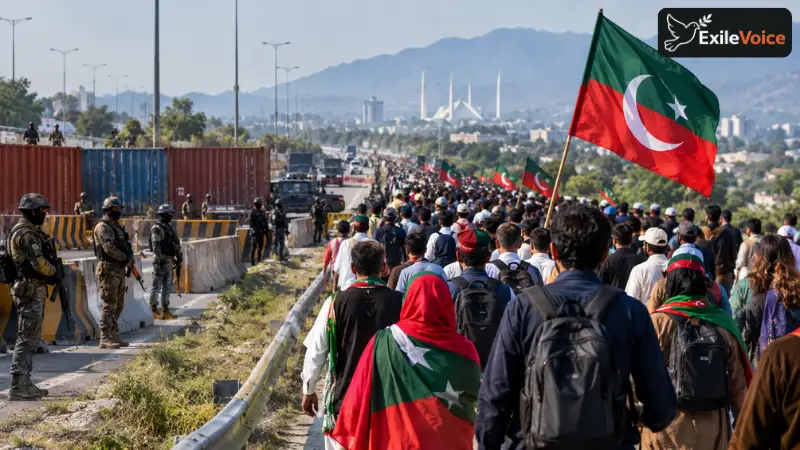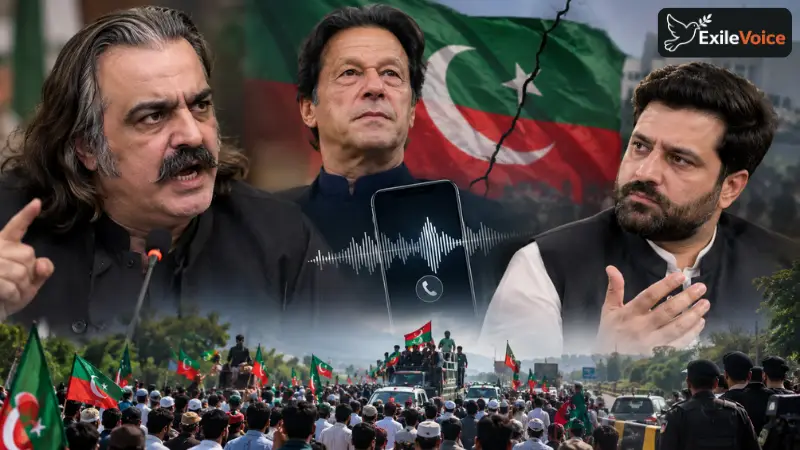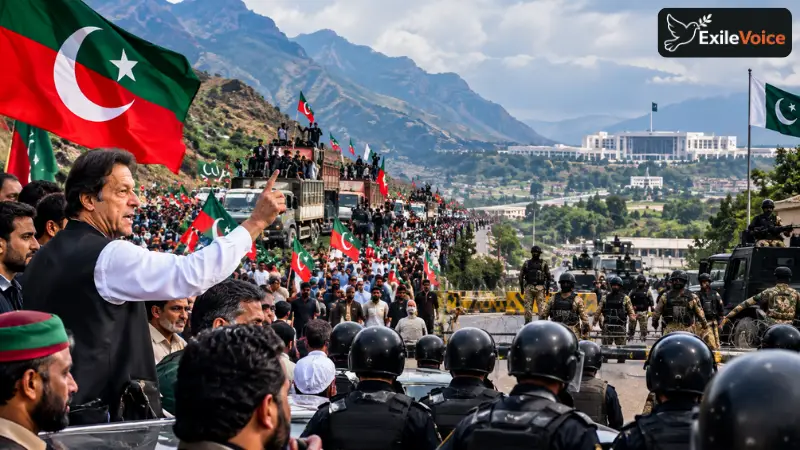
The political trajectory of Pakistan’s Khyber Pakhtunkhwa (KP) province has reached a critical juncture as escalating institutional friction and persistent public demonstrations challenge the central government’s authority. Tensions between provincial leaders and federal law enforcement have culminated in a high-stakes standoff, characterized by intense political maneuvering, localized unrest, and unwavering public mobilization surrounding the ongoing PTI (Pakistan Tehreek-e-Insaf) political movement.
Despite increasing pushback from federal security apparatuses and repeated efforts by central authorities to contain political gatherings, leadership within Khyber Pakhtunkhwa remains firm in its refusal to stand down. Political strategists and party representatives have reiterated that the long march toward the capital will proceed without interruption or cancellation. The resistance within the region highlights a growing structural disconnect between provincial governance structures and central regulatory mandates, creating an environment where administrative friction regularly spills over into public discourse.
At the core of this ongoing confrontation is the leadership in KP, which has consistently leveraged regional sentiment to maintain momentum. Highlighting widespread dissatisfaction with central economic, security, and political policies, local leaders have framed their movement as an essential stand for constitutional rights and democratic norms. Street-level demonstrations, public processions, and regional rallies across key districts have reinforced party cohesion, demonstrating that mobilization capabilities remain intact despite administrative restrictions and legal challenges faced by leadership figures.
From a strategic standpoint, Khyber Pakhtunkhwa has served as a primary operational hub for opposition activities. The geographical advantage, combined with strong local electoral support, allows provincial leaders to organize large-scale convoys and resistance efforts before attempting entries into administrative centers like Islamabad or neighboring Punjab. Federal attempts to curb these movements through road blockades, legal notices, and heightened security presence have met with persistent tactical shifts from organizers, who utilize alternative routes and decentralized gatherings to sustain engagement.
Furthermore, the situation reflects deeper constitutional questions regarding provincial autonomy versus federal oversight. As federal agencies increase surveillance and enforcement operations within or along KP borders, provincial officials argue that such actions breach constitutional guarantees regarding local governance and freedom of assembly. Conversely, federal authorities insist that these measures are necessary to maintain law, order, and public safety across regional borders.
As the political deadlock persists, the refusal to cancel the long march signals a prolonged period of instability. Without formal dialogue or political compromise between conflicting factions, the escalating confrontation in Khyber Pakhtunkhwa threatens to exacerbate national political volatility and further complicate broader administrative and economic governance across the country.