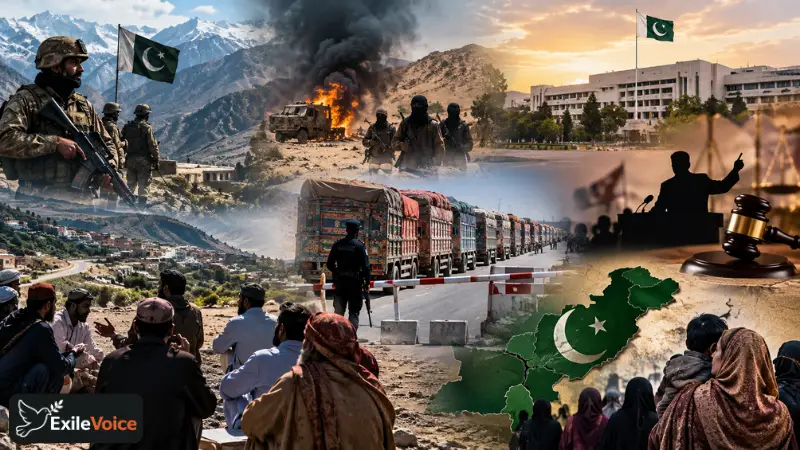

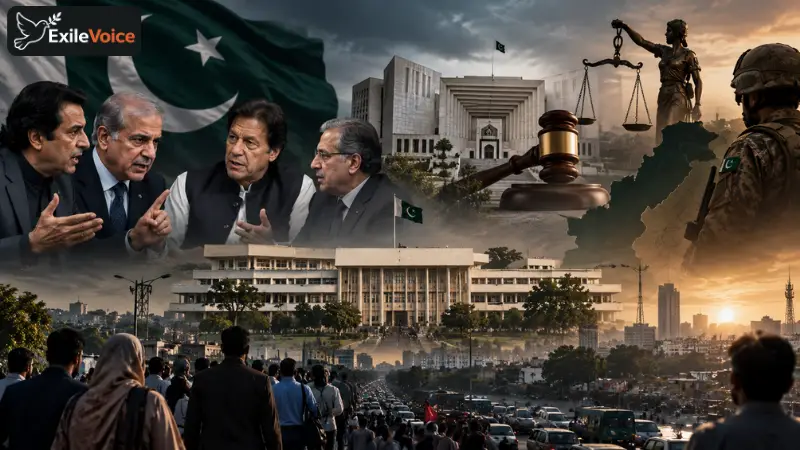
The political landscape of Pakistan continues to experience profound turbulence, marked by intensifying friction between state institutions, the judiciary, and prominent political figures. Recent developments highlight deep systemic strains as various political entities and administrative bodies trade accusations regarding governance, policy execution, and legal procedures. Analysts note that these ongoing disputes underscore a broader crisis of consensus, affecting public administration and policy implementation across key provinces.
In legislative forums and administrative briefings, senior officials have increasingly engaged in public exchanges concerning administrative control, emergency measures, and regulatory policies. Observers indicate that these disputes often reflect underlying tensions regarding institutional boundaries and the division of authority. While administrative authorities emphasize the necessity of maintaining public order and security, critics argue that such measures frequently constrain political discourse and civil liberties. The involvement of multiple stakeholders, ranging from regional leaders to federal administrators, points to a complex network of competing interests that complicate reform efforts and institutional stability.
Furthermore, public discourse has focused heavily on the socio-economic impacts of these political frictions. Citizens frequently bear the brunt of administrative bottlenecks, fluctuating security protocols, and economic uncertainty. Experts emphasize that sustainable governance in Pakistan requires a renewed commitment to constitutional transparency, institutional accountability, and constructive dialogue among all political factions. Without these foundational changes, the cycle of political confrontation is likely to persist, posing ongoing challenges to national development and democratic consolidation.