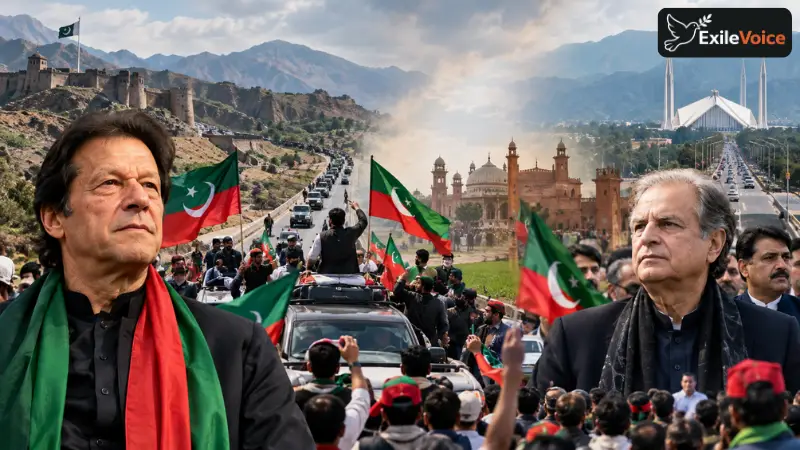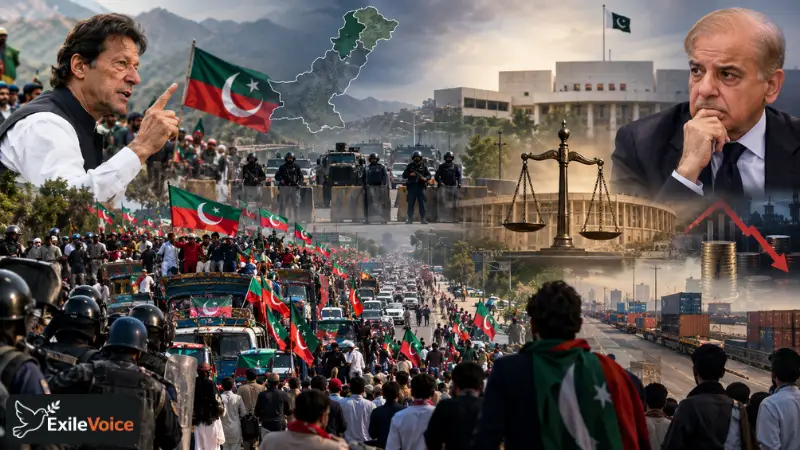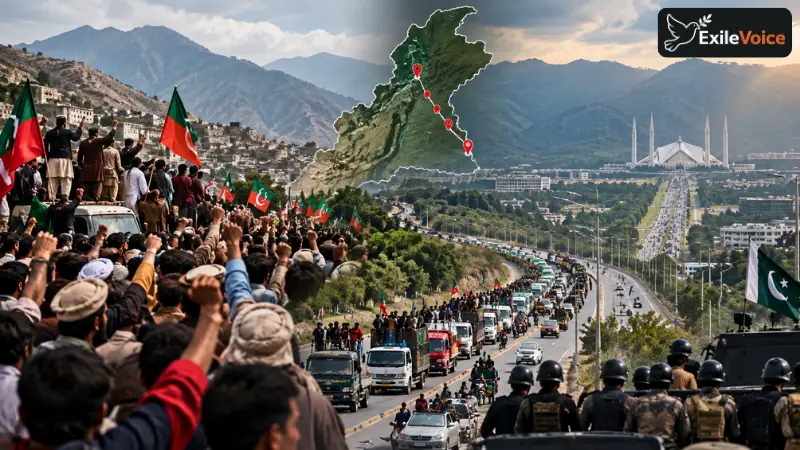
The political landscape in northern Pakistan has reached a critical juncture as public rallies and protest marches gather momentum across Khyber Pakhtunkhwa. Recent demonstrations in Bara, Khyber Agency, alongside the ongoing political mobilization stretching from Swabi toward Islamabad, signal a structural shift in regional opposition dynamics. These gatherings reflect not merely routine political agitation, but a deeply organized and widespread grassroots response to escalating federal-provincial tensions, socio-economic grievances, and governance challenges.
At the core of this political surge is the ability of opposition leadership to galvanize disparate factional bases into unified resistance. Thousands of local residents, political workers, and youth movements have converged across key transit corridors in the region. The sheer volume of participants passing through traditional strongholds like Bara highlights how local tribal and municipal networks are being integrated into national protest movements. By leveraging regional discontent over security policy, governance deficits, and civil liberties restrictions, political strategists have successfully turned Khyber Pakhtunkhwa into the primary engine of national political leverage against the ruling establishment in Islamabad.
Logistically, the movement demonstrates sophisticated operational coordination. Protesters are organizing staged caravans, utilizing decentralized communication channels, and establishing continuous supply chains to maintain long-term presence along highway routes. The Swabi-to-Islamabad corridor, historically a vital strategic bottleneck, serves as a primary pressure point against the federal capital. By maintaining pressure at key highway intersections, opposition groups effectively tie down federal law enforcement assets, strain local administrative capacity, and force central authorities into reactive security postures.
The political ramifications for Islamabad are substantial. Federal officials face a complex dilemma: deploying aggressive law enforcement measures risks further escalating public outrage and igniting wider civil unrest across volatile border districts, while adopting a passive stance allows opposition forces to consolidate control over primary transit arteries and dictate political terms. Furthermore, the economic friction caused by trade disruptions along key northern routes exacerbates existing regional supply chain issues, adding economic urgency to an already volatile political deadlock.
Looking ahead, the sustainability of this protest wave will depend on the opposition's capacity to maintain momentum across extended timelines without suffering internal fragmentation. As federal authorities evaluate options ranging from negotiated security accommodations to administrative crackdowns, the ongoing march from Khyber Pakhtunkhwa stands as a pivotal benchmark in Pakistan’s evolving constitutional and political balance of power.